Smart, Successful, Strong

The case for investing in adolescent girls’ education in aid and COVID-19 response and recovery

To mark the release of our latest report, ‘Smart, Successful, Strong: The case for investing in adolescent girls’ education in aid and COVID-19 response and recovery‘ we’re spotlighting the foreword written by girls from Indonesia, Vietnam and Kiribati.

Education is the key to a level playing field for all. It provides us with knowledge about the world. It paves the way for a good career. It helps build our characters. And when girls’ are educated, it can improve economic development, reduce inequality, and help build a more stable and resilient society so that all individuals have the opportunity to realize their potential. But due to the impacts of COVID-19, girls are missing out.

During lockdown, we face a higher risk of violence and harmful practices. The economic impacts of the pandemic are causing us to put our education and our hopes and dreams on hold, to help ease the financial burden, and girls are dropping out and getting married early. Some of us may never have the opportunity to return to school.

Many of us lack internet access and devices, so we cannot study, even if online learning is an option. And if we do have internet access, we still struggle to keep up with school work because we often have to deal with the burden of housework too.

School closures has changed the way we socialize with our friends and learn, there’s more pressure and it has affected our mental health.

It’s likely that students will still be doing online classes for awhile, so solutions for the problems are needed to make it more effective and less of a burden.

We can’t stand alone, we need help from others, and that’s why this girls’ education report is so important.

The Smart, Successful, Strong report provides evidence of how COVID-19 has interrupted girls’ path to education, and gives a voice to the young women who are facing these obstacles. As girls and young women, we often don’t get to have a say in the decisions that affect our lives; this report is important because it gives us a chance to be heard.

The world needs to know what girls are facing to eliminate problems. No one knows what girls are dealing with better than themselves and that’s why we need to listen to girls’ voices and amplify them, to inform world leaders or power holders.

We will not be silenced. We are here to ask for our rights, and power holders need to actively listen to girls’ voices when it comes to decision making. We need to make sure girls’ education is not ignored or excluded during the process of building back a better normal after COVID-19, so that all girls are free to discover their potential.

Education doesn’t just transform our lives, but it also transforms our families, our communities, our countries, and even the world. It’s the key to a brighter future and better world.

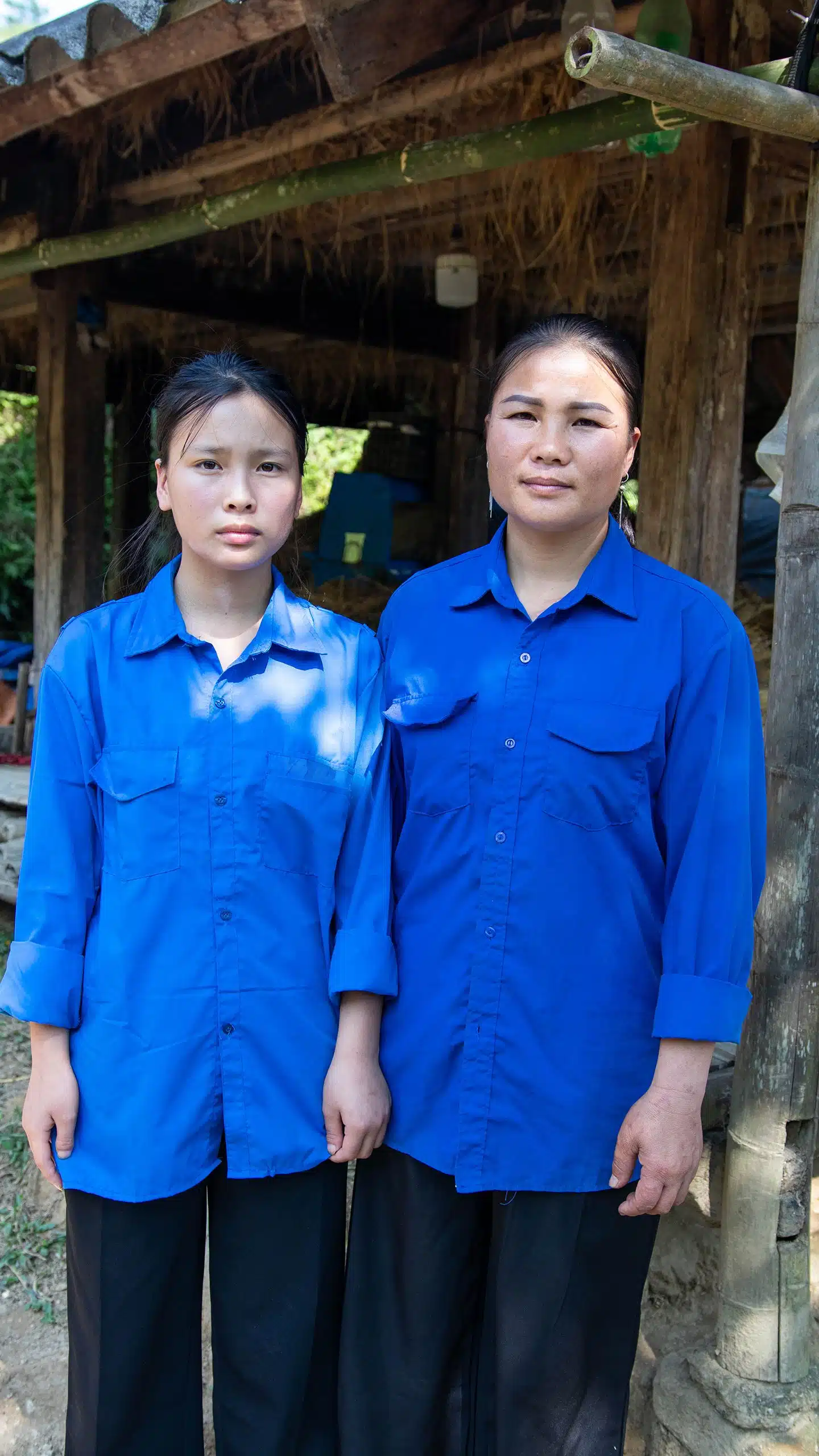
Written by Difon, (17 years old, Indonesia), Vania (17 years old, Indonesia), Nhi (19 years old, Vietnam), Duong Phuong Anh (22 years old, Vietnam), Tebwebwe Terikaua (20 years old, Kiribati) and Taarawa Ukenio (25, Kiribati).

Girls’ vision: “All adolescent girls must be able to complete their education, including being able to return to school if the pandemic has pushed them out of the classroom.”  

Through workshops in Indonesia, Vietnam and Kiribati, we asked girls to provide their recommendations for donors and decision-makers to create equal access to quality and inclusive secondary education for all girls.

This was the message that the girls we spoke with issued, loud and clear. They want to see gender equality in education; they want schools to be able to ‘build back equal’.

In particular they called on donors and decision-makers to invest in initiatives that:

  • Educate girls, families and communities about their right to complete 12 years of education, including an end to child, early and forced marriage/unions
  • Bridge the digital divide
  • Provide age and gender appropriate support for girls’ mental health and emotional wellbeing
  • Create more opportunities that enable girls to be leaders
  • Provide girls living with a disability with the same opportunities to access and complete education as all learners
  • Rebuild the education system to promote values-based learning that encourages and teaches diversity and inclusion, respect and care for each other, so that schools are more welcoming environments for all and free from discrimination, gender-based violence and harassment
  • Remove financial barriers to accessing or completing education, and ensure all schools have access to the same level of resources
  • Ensure girls’ voices and views are central to decision-making, with school systems and curriculums co-designed with young people and participatory policy making processes
  • Embed comprehensive sexuality education in formal and informal education settings and ensure it is accessible for all children, adolescents and young people
  • Ensure schools are more environmentally-friendly and teach climate change and action

Education is everything. It unlocks doors and dreams, and unleashes potential. When girls have the chance to be educated, the barriers they face to equality are much easier to break – both for themselves and for future generations.

Recommendations for Australia’s Aid and Development program

Australian Government’s Partnerships for Recovery  — Australia’s COVID-19 Development Response — recognises that education is central to maintaining stability and promoting economic recovery in the Indo-Pacific region, and reaffirms Australia’s strong commitment to enhancing gender equality and prioritising the needs of those most marginalised, including women and girls.

However, the Smart, Successful, Strong report highlights the ways in which the right to complete secondary education is shifting further out of reach for millions of adolescent girls in South East Asia and the Pacific as education systems are disrupted and families and communities descend into poverty and hardship.

The report sets out the following recommendations for Australia’s Aid and Development program:

  • Australia must increase its investment in education aid in the May 2021 budget by reinvesting the regional scholarships fund of $66m into education aid – with a focus on initiatives that will strengthen secondary education systems and address barriers that have pushed girls out of school during the pandemic.
  •  The Australian Government must rebuild its standing as a leading bilateral donor to the Global Partnership for Education (GPE), committing to a replenishment of $70m in the May 2021 budget.
  • The new Pacific Women Lead program (currently being redesigned) must include both a stand-alone adolescent girls program with a focus on secondary education as well as mainstreaming adolescent girls across the new program.
  •  Australia must play a leading role in advocating for and supporting countries in the region to prioritise education as a key component of COVID-19 response and recovery through its bilateral partnerships.

What does peace mean for Gaza’s children?

By Dr Unni Krishnan, Global Humanitarian Director, Plan International.

For children in a war zone, peace means hope.

A ceasefire is a fragile thread that provides hope in the face of unimaginable hardship. After 15 months of relentless suffering, a just peace offers a rare moment of respite for Gaza’s children and children who are held as hostages and prisoners, an opportunity for healing and recovery, and the promise of a life beyond the horrors of war.

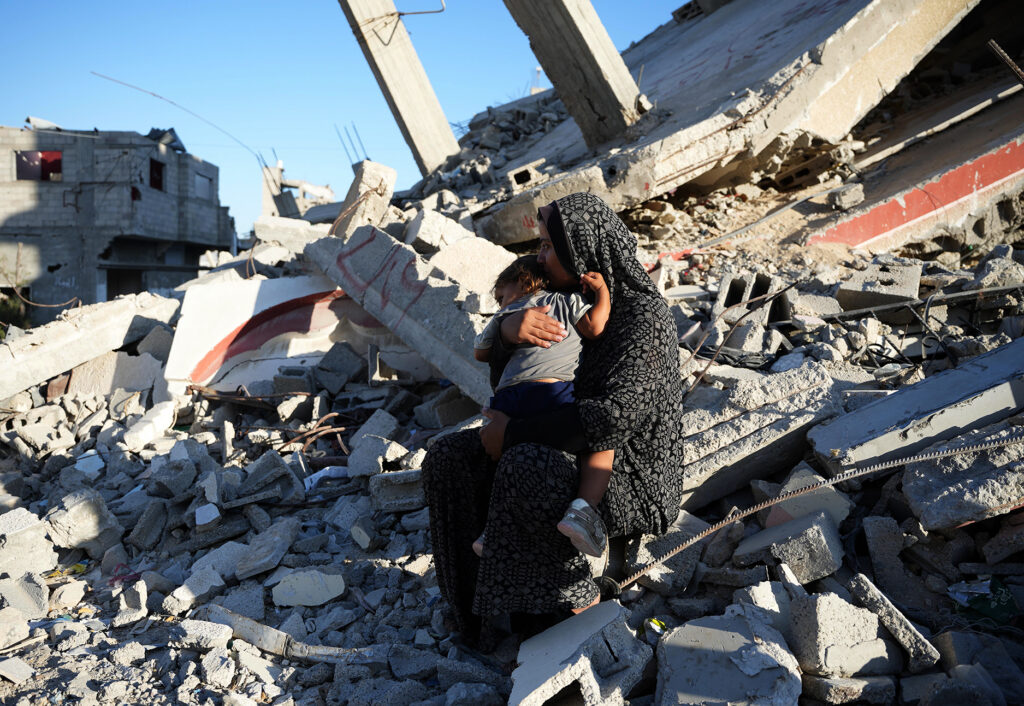
During a humanitarian mission to Gaza a few years ago (around the time when a ceasefire was announced during another war), I met Wahida, eight, outside Omar Khattab Primary School in North Gaza. The devastation was shocking, visible through the bombed-out structures, twisted steel and rubble where a school stood once.

I noticed Wahida and her friends searching for something in the rubble. A smile broke on Wahida’s face when she managed to locate a colourful poster – one she had made with cheap crayons and paint for her school project. She told me that she was happy she got it back, sad the bombs burned part of it.

Wahida’s optimism shone through as she expressed hope that soon there would be no more bombs and missiles and she would return to school to play with friends. It was a reminder that even in the darkest moments, children still dare to dream of peace.

As a humanitarian worker in conflict and war zones, I have seen firsthand the horrific toll that war takes on the most vulnerable – children. From bombings to separation and displacement, the trauma of the war stays with them long after the guns fall silent.

But I have also witnessed the power of peace and what ceasefires can bring to bombed out homes and neighbourhoods, where families used to live, share a meal and laughter. Life will never be the same when you live through a war, if you are lucky enough to survive one.

A thousand actions are now needed in Gaza. From practical experiences of working in war zones and from the history of ceasefires in Gaza and elsewhere, here I list four vital steps:

1) Put children first

Children never start wars, but suffer the most. In Gaza, children bear the brunt. At least 17,580 children are amongst the 46,707 people killed in just 15 months. Burn injuries from bombs and missile strikes have taken a very heavy toll on the fragile bodies of young children.

Over 21,000 children in Gaza have sustained conflict-related injuries, including children who are severely wounded with no known surviving family members, requiring significant rehabilitation. Many will sustain long-term disabilities, which amplifies emotional suffering and reduced mobility stops children from accessing vital service.

There are children amongst the hostages taken from Israel, and Palestinian children are being held in illegal detention in Israeli prisons. They have endured suffering that no child deserves. Research studies show that hostage and kidnap survivors can often experience stress reactions including denial, impaired memory, shock, numbness, anxiety, guilt, depression, anger, and a sense of helplessness.

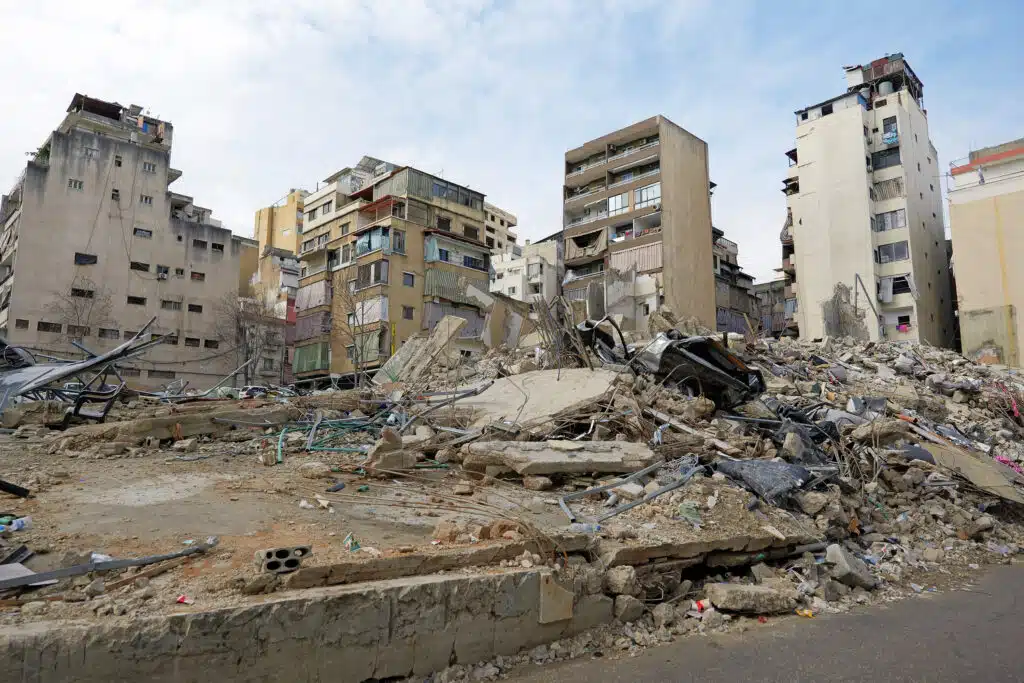
In Gaza, children have lost their homes, separated from friends, families and caregivers. Thousands remain buried in the rubble of bombed out homes, and hospitals and schools, decimated in relentless bombing by Israeli military, leaving most of Gaza in unliveable condition.

Prioritising children’s needs should be the starting point in relief and recovery efforts.

2) Commit to a lasting ceasefire

“In a war zone, you can sign a peace deal on the back of a used envelope” is an often-repeated simple truth amongst mediators and negotiators. Making ceasefires work and making them travel in the direction of permanent peace depends on how much the parties in the conflict are committed to it.

A ceasefire is the beginning, not the end. It is an important turning point offering a future without war. Action must go beyond the immediate end of violence for lasting peace. All parties involved in the conflict must fulfil their promises and be held accountable for violations that may rock the peace deal.

Scaling up lifesaving humanitarian assistance and facilitating unhindered access for aid workers and relief supplies to all areas of Gaza is critical.

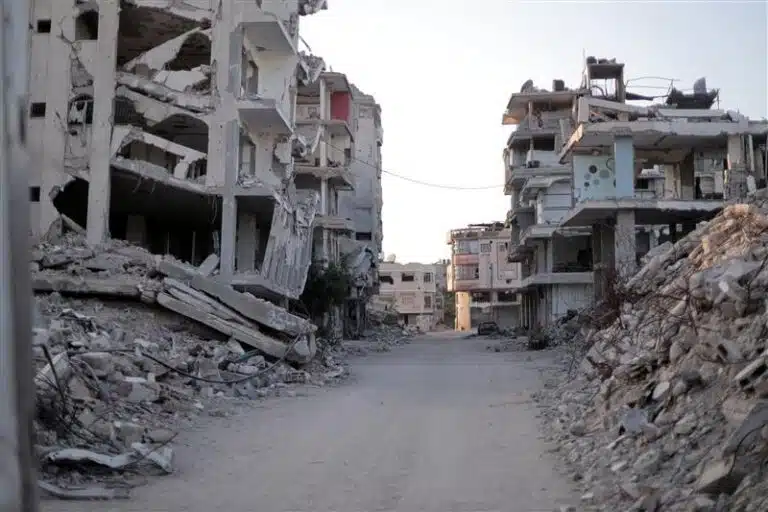
90% of school buildings have been damaged or destroyed. Destruction of schools means that countless children are left without access to education or safe spaces to play, heal and learn. Rebuilding school and educational facilities along with hospitals and homes must be a top priority.

The destruction of water and sanitation systems has left children exceptionally vulnerable to life threatening waterborne diseases, such as diarrhoea and cholera. Restoring clean water access and sanitation must be a top priority to avoid further health emergencies and preventable deaths.

3) Go beyond visible needs

The situation is dire. Food, water, safe shelter, healthcare, emotional support, protection and education services should be prioritised to help children and the Gazan people recover and heal.

Thousands of children are still facing famine-like conditions. Time is running out fast. Food and nutrition supplies should be a first priority. The destruction of water and hygiene facilities has forced girls and women to go without baths for days or even weeks, impacting their health and dignity. Cash assistance can go a long way to get markets functioning.

The war’s psychological impacts are often invisible but still catastrophic. Amnesty International had concluded that Israel was committing a genocide against Palestinians in Gaza. It came after the UN Special Committee concluded that the policies and practices of Israel against Palestinians in Gaza are consistent with the characteristics of genocide.

Children in Gaza have witnessed death, suffering and violence that would be unimaginable to most adults. An 18-year-old in Gaza today will have lived through conflicts in 2006, 2008, 2012, 2014, 2021 and now since October 2023. There is only so much young minds can take. Each new war chips away their innocence and steals their childhood.

Even when guns fall silent, psychological scars remain. Healing these wounds requires more than just medical treatment, it requires compassionate care and support.

Essential supplies, emotional care, schools and playgrounds can go a long way to help children heal.

Living through the early days of a ceasefire is often like living between anxiety, fear and hope. And matters of the mind are not always that obvious. Emotional care and support should find a central place in relief and recovery efforts.

4) Care for relief and health workers

Equally crucial is the support for those who are on the frontlines. Relief workers, nurses, ambulance drivers and doctors have demonstrated remarkable resilience and resistance, but the emotional toll of conflict is immense. Thousands of such relief workers and medical staff have experienced this brutality for over 15 months, on a daily basis.

The restrictions imposed by Israel on vital aid supplies have forced doctors to conduct surgeries without or with very little anaesthesia. Some have told me that they have conducted surgeries or even amputations on their own children in such terrible conditions. Teachers have witnessed schools being reduced to rubble. Parents have witnessed forced starvation reducing children to their bones.

Relief workers have expressed anger, sadness and emotional suffering. The vital work they do is perhaps one of the most important catalysts to rebuild lives. The human mind works like a balloon and requires the utmost care and attention in a war zone to make relief efforts impactful. Helping relief workers heal emotionally should be a key consideration.

The destruction in Gaza has been catastrophic. UN secretary general Antonio Guterres once warned that Gaza was ‘becoming a graveyard for children’. The past 15 months have tragically confirmed those fears.

Yet in the face of such despair, we must remember that even in rubble, there are fragments of hope. I remember vividly what I saw on a charred poster at a bombed school in North Gaza. It bore the words of Mahmoud Darwish, regarded as the Palestinian national poet:

“There is so much on this land worth living for.” For Gaza’s children a ceasefire and permanent and just peace means finding a way to live for those fragments of hope.

How can you help children in Gaza?

The ceasefire in Gaza offers a critical opportunity to help children and their families. With the support of our partner organisations, Plan International is working tirelessly to deliver urgent humanitarian aid to children and families affected by the conflict.

We urgently need support to provide life-saving humanitarian aid to as many people as possible. Your donation will go straight towards:

  • life-saving food, first-aid, water, and medicine for families who have lost everything
  • shelter kits for families crossing the border so they have somewhere safe to sleep
  • menstrual hygiene kits so women and girls can manage their periods with dignity
  • child protection services for children who have lost their parents, and are at risk of child-trafficking and exploitation
  • counselling for children and their families who have been traumatised

Every hour we wait, even more children are at risk if  they do not receive urgent supplies.

Rafah: The Realities on the Ground

The killing of seven World Central Kitchen (WCK) staff on April 1 brought significant attention to the extreme insecurity Palestinian and international aid workers and civilians alike have faced in Gaza since October 7. The WCK attack showed: no one is safe in Gaza.

On April 6, following the outcry of Member States, the Government of Israel made seven commitments in a reported effort to increase humanitarian access into Gaza.

In this detailed paper describing the challenges for humanitarian access in Gaza, NGOs highlight that the current situation is only expected to deteriorate even further with the Israeli military invasion of Rafah, voicing concerns towards the potential closure of the Rafah crossing and the evacuation of aid actors from the governorate.

Third States must urgently put Israel’s Rafah military operation on top of their political agenda  and allocate substantial efforts to  create monumental diplomatic pressure to deter  the Government of Israel from moving forward with its plan immediately. States must also use all bilateral tools at their disposal to directly pressure parties to the conflict into a sustained unconditional ceasefire.

Child Marriage Stories: Girls and Young Women Leading the Charge

Every girl deserves the right to choose who, when – and if – she wants to marry.

But around the globe, child marriage denies girls the freedom to make their own decisions, be in charge of their bodies, and to have choices and opportunities for their futures.

Early and child marriage isn’t isolated to one culture, religion or group of people. It cuts across countries, cultures, religions and backgrounds. The root causes which allow it to continue are gender inequality, poverty, cultural norms and a lack of education. All of which we have the power to change.

And it’s girls and young women all around the globe who are leading the charge. Here are some of their incredible stories.

“When you empower a girl, you empower a whole nation”

Photo: Cherifatou*, 17, has avoided an early marriage by learning sewing skills. © Plan International

17-year-old Cherifatou* from Niger was almost forced to get married because she was seen as an economic burden to her family.

It felt like the only option for her mother, after Cherifatou’s father, brother and uncle were killed by gunmen. Niger has significant humanitarian needs due to conflict, displacement and food insecurity. The violence affecting several regions in the country is continuing to force people to abandon their homes in fear of their lives

“Our resources are dwindling by the day. We live thanks to the generosity of the villagers who give us food,” shares Cherifatou. “To improve our living conditions, my mother wanted to give me in marriage to an older man, as I had become a burden for her. Another mouth to feed.”

As conflict results in declining economies and disrupts access to food, child marriage is seen as a desperate solution for financial stability for families. Niger has one of the highest rates of child marriage in the world, in part due to the political, environmental, and economic instability in the country.I refused to give in, I refused to get married.”

“Awareness raising sessions are often organised in our village. We were made aware of the importance of reporting cases of gender-based violence. This gave me hope, because there are solutions for people who have dropped out of school and are subject to violence,” shares Cherifatou.

Cherifatou was referred to Plan International’s implementing partner Inclusive Dynamics for Local Development (DIDL) who monitor the activities of the protection committees that have been set up in the region. Part of their role is to identify out-of-school girls at risk of early marriage and equip them with the skills and tools needed to generate an income.

“DIDL helped me a lot. Together we identified my needs and developed a business plan. I received the sum of 86,000 FCFA (130 Euro) to buy a sewing machine so I could attend training sessions with the village tailors for a month. Without a sewing machine, I could not become an apprentice tailor as you need to have your own sewing machine and pay the sum of 3,000 FCFA.”

Tailored to the local needs of communities, and in the context of the crisis, Plan International is helping girls like Cherifatou avoid early marriages and become financially independent. The programme ensures young people have the skills they need to earn a sustainable income and build a better future for themselves.

“Thanks to my sewing activity, I make an average income of 3,000 FCFA per day and a profit of 5,000 FCFA each week, which enables me to take care of myself, contribute financially to my family and save to expand my business.”

*Name changed to protect identity.

The Girls Who Stopped Their Own Weddings

Photo: Debritu was able to stop her own forced marriage © Plan International

When her mother fell ill when she was 16, Debritu had to drop out of school. Not long afterwards, her father decided to marry her off.

“A family member told me about the marriage plans. I asked my parents to stop planning the wedding, but they refused. They told me they would be cast out of the community if they called off the marriage. They had already received money from the bridegroom’s family and arranged the wedding. I was crying and stressed. I considered running away from my family, but I was terrified since I didn’t know what I might encounter.”

Debritu met with the Champion of Change member in her village about what to do. She was directed to Fantanesh, the project facilitator who took her to the district’s bureau of women’s and social affairs.

“When I explained my situation to the staff there, they assured me that they could handle it without any harm coming to me. Then, my case was reported to the police. I told the police officers that my family was forcing me into marriage against my will. The commander of the police station immediately gave my mother and father notice to attend the police station.

My parents instantly changed their minds after hearing the police chief’s order and learning that they could go to jail for arranging a marriage for an girl under the age of 18. They called off the wedding ceremony and agreed to pay back the money they received for marriage by selling their cow. I was relieved and glad that the marriage had been called off. After that experience, I gained confidence and I wanted to help other girls in the community facing forced marriages.”

“If anyone I know is being forced into a marriage, I tell them to refuse it and report it to the authorities. It is their life. They should say no to child marriage!”

“I now take part in the community discussion that the My Choice for My Life project organises, and I have learnt a lot. I know now more about gender equality and sexual and reproductive health services. I also share what I have learnt with other youngsters in my community.”My mother now regrets her earlier attitude. Now that she is aware that getting married at 16 or 17 is harmful for girls, she advises her neighbours not to marry their daughters off at an early age.

  • Says Debritu.

Shompa stopped her child marriage. Now she helps other girls to do the same.

Photo: Shompa and her bicycle. © Plan International

At 16, after passing her secondary school examinations in 2017, Shompa’s family decided it was time for Shompa to get married. Despite her protests, Shompa’s parents refused to listen to arguments against the marriage, and the wedding plans continued.

Now 21, Shompa is a committed advocate against early marriage and has so far managed to stop five child marriages in her community.

“I visit the households, meet the families, share my own real-life example, and convince them against marrying their girls off early. In this way, I also assure the parents to not to worry about their daughters’ education. I will provide tuition free of charge,” explains Shompa. Shompa is determined to help all girls in Bangladesh reach their full potential through their education.

Now a second year student at college, Shompa covers the cost of her education by working as a tutor in her community. From a low-income family, Shompa’s father works in a restaurant, and her mother is a domestic maid. Her bicycle is her constant companion on her way to college and her work.

Shompa conducts regular courtyard sessions to raise awareness of the 2017 Child Marriage Restraint Act to highlight the laws against child marriage in Bangladesh and warn adolescent girls about the destructive consequences of early marriage.

Girls and young women are achieving remarkable things around the world. That’s why Plan International is working with girls in communities where child marriage occurs to make sure they know their rights. Because when we can create a better, more equal world for girls – we create a better world for everyone.

Child marriage denies girls their childhood, the chance to go to school, to be independent and to choose their own future. But you can create choices which prevent girls from experiencing the lasting trauma of child marriage. Make a tax-deductible donation today and show your commitment to ending this practice.

Donate Today

Trapped in Gaza: “I don’t want to die”

In Gaza, women and children are bearing the brunt of the escalation of violence between the Israeli government and Palestine armed groups. Thousands have been killed and an estimated 1.5 million people have been displaced – more than half of them children.

Fatima*, 23, is part of our She Leads consortium, a regional programme that supports girls and young women in the Middle East to speak up for their rights and lead change in their communities and beyond. Currently displaced in Gaza with her family, Fatima shares a little about her situation and her hope for an end to the conflict.

“We had to leave our house because our area was no longer safe. We are currently in another house that’s just a little, a tiny little, bit safer, considering that in Gaza, all locations are unsafe. Nowhere is far from the bombing, and the probability of being killed is never far away.

We are in range of being bombed, being killed, and being gone in seconds. The situation here is honestly bad but thankfully we are alive. We see how other countries are standing with us, which gives us strength. And what is personally keeping me strong is the Girls Lead group which makes me feel like I have a second family.

I don’t want to die because there are people that I want to spend more time with. Usually, we don’t have a problem with death as we believe that it is normal to become martyrs. However, I don’t know. This is the first time I have felt that I don’t want to die because there are people that make me feel like I want to spend more time with them and want to see them more.

I have so many things that I still want to do and many dreams that I want to achieve. Life here has become abnormal because nothing is ordinary anymore. I feel we will need a lot of time to get back to normal and deal with matters in an ordinary way. This is because everything here is in chaos, all the things we see, hear, and even where we live.

I am really sorry that I can’t take part in the She Leads activities at the moment. I was really very excited join in with the activities, to make my voice heard, and to share everything I wanted to say to people. I would really like to thank you (the She Leads coordinator) for being present, for supporting me and for being there by my side.

I want to support the children in Gaza, to let them know that they can contribute to change, they can be better, and learn more. I also want to share my experiences at a higher level, so I hope that everything will end soon and we can go back to our activities and do everything we were planning to do.

I have a lot to say but I don’t know what to say. I hope that once the war ends, we can meet again and speak more. The most important thing is that you are well and safe. It’s funny that I am telling you to stay safe as if you were also here in Gaza. Wherever you are, stay safe and take care of yourselves.”

As a humanitarian organisation that advocates for the rights of children everywhere, we are devastated and horrified by the conflict that has erupted in Gaza and Israel. Right now, children in Gaza, the West Bank and Israel are suffering when they should be living their lives without violence and fear.

We urgently need your support to protect children and families fleeing violence. You can donate to our appeal and sign our petition calling on Foreign Minister Penny Wong, for an immediate and permanent ceasefire and increase in humanitarian assistance to Gaza.

*Name changed to protect identity.

Struggle and resilience of people fleeing violence in Sudan

Struggle and resilience of people fleeing violence in Sudan

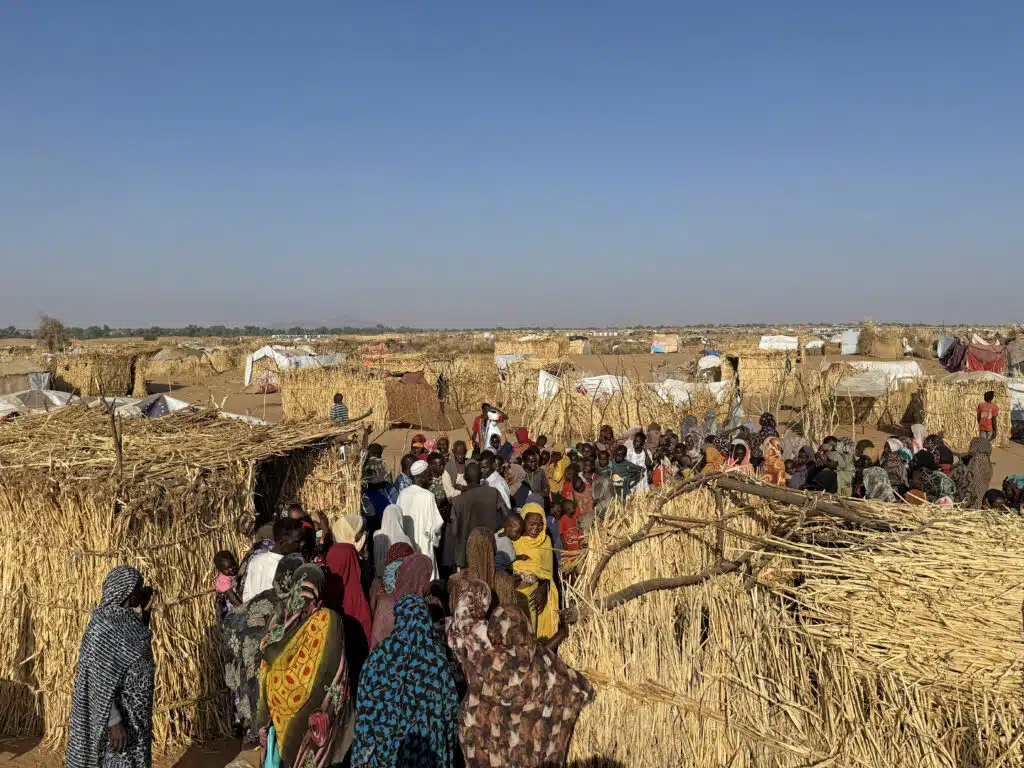
People who have fled conflict in Sudan find dire humanitarian conditions in South Sudan but cling to the hope of a better future, writes Omar Sabry, Deployable Humanitarian Policy & Advocacy Specialist.

Rania entered with a solemn gaze, her eyes showing both sadness and determination. “Things happened in my life that I never would have expected. I never expected to be in a place like this for so long.”

28-year-old Rania, originally from Upper Nile State in South Sudan, arrived in Renk, northeastern South Sudan with her two daughters and two adolescent siblings after fleeing the conflict in Khartoum. They came with nothing but their clothes.

Rania had left Khartoum, Sudan for South Sudan in 2011, but intercommunal violence drove her to leave again for Khartoum in 2014.“I want my voice to reach everyone,” Rania told me. “I want all wars to stop. I want the next generations to stop living in conflict. I am an adult – maybe adults can deal better with conflict and violence, but my daughters cannot cope with this.”

Rania

I recently came back from Renk. Over 240,000 South Sudanese returnees and Sudanese refugees have arrived at the Renk Transit Centre since April 2023. I spoke to almost 40 girls, boys, women and men about their lives before the crisis in Sudan, living in conflict, their treacherous journeys to South Sudan, their current living conditions as well as their hopes for the future. Like Rania, many of them have been displaced by conflict and violence at least twice.

Children told me stories of hearing bullets and explosions darkening the sky from their homes in Khartoum. They told me that when the conflict started, schools immediately closed. A family of nine would all hide together under the bed in fear.

Families seek safety

Many people I spoke to said they paid exorbitant sums of money to drivers of overcrowded buses and trucks just so they could flee and seek safety. Many children spoke of seeing many dead bodies on the road. Some had to sell their phones on the way so they could complete the journey to South Sudan. One person told me an armed group confiscated their belongings, and another told me he was detained for three days.

In Renk, where some of those I spoke to have been for up to five months, the humanitarian conditions are dire: overcrowding, flooding, communicable diseases, and a lack of adequate shelter and health services. Everyone I spoke to said they didn’t have enough food; one woman told me sometimes she spends two to three days without eating. Most sleep outside on the mud, either covered only by a mosquito net or by leaky plastic or bed sheets that don’t protect them from the rain. One mother told me she had three tumours that she can’t afford to treat.

Refugees around an aid truck in a transit centre, South Sudan
Six months since the start of conflict in Sudan, more than 220,000 people fleeing the fighting have crossed the border into Renk, a town located in the northernmost state of Upper Nile in South Sudan.

People are desperate for transport, but flooding, logistics challenges and funding shortfalls are causing congestion in Renk and in other transit points elsewhere in the country, notably in Malakal.

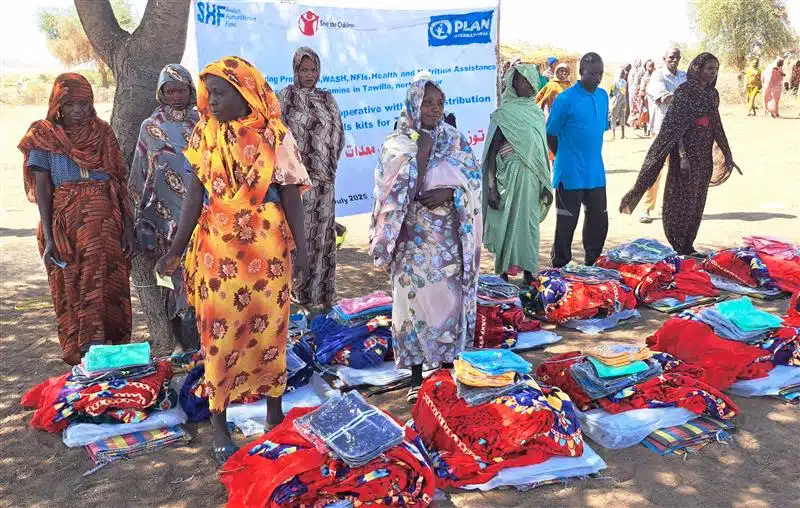
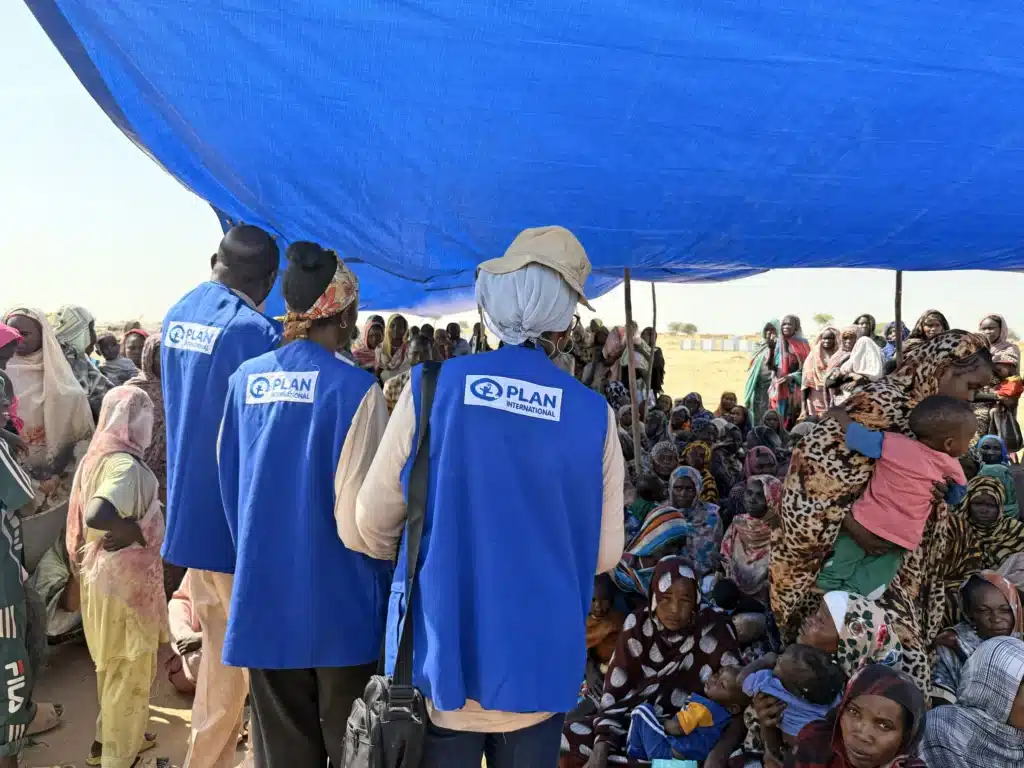
Plan International’s humanitarian response in both Renk and Malakal includes child protection, shelter, education, cash programming, psychosocial support, non-food items and hygiene awareness-raising, with plans to scale up activities further.

Conflict exacerbates humanitarian crisis

The impacts of the Sudan crisis are exacerbating an already urgent humanitarian situation in South Sudan: extreme flooding, intercommunal violence, many and often gendered protection risks, and a fragile health system. South Sudan already has one of the highest rates of children out of school, some of the most severe food insecurity, and is one of the most climate-vulnerable countries in the world.

Despite everything they have been through, everyone spoke to me about their hopes and dreams. They want to study and become doctors, engineers, farmers and ministers. They want to build homes and be with their families. One young woman told me she wanted to go to Malakal, Upper Nile State to treat patients. One boy whose father is paralysed told me he wanted to be a doctor so he could treat the paralysed and build a home for orphans.

Bhan, an 18-year-old who first fled intercommunal violence in Jonglei State alone at the age of 13, told me:

My only demand is to study, because I need my life to change.

After over a decade of protracted crisis in South Sudan, the international community must, in partnership with local and national authorities:

  • step up with flexible, multi-year funding to close funding gaps for emergency assistance and protection using gender and age-sensitive interventions, and onward transport for the hundreds of thousands who have fled the crisis in Sudan.
  • prioritise the protection of all civilians, including through specific measures for child protection, by mitigating risks, addressing needs and promoting durable protection solutions and respecting international humanitarian law.
  • ensure interventions are made in a way that bolsters the resilience of communities, builds local capacities and promotes social cohesion and inclusive peace efforts
  • bolster efforts to improve humanitarian access by ensuring the safety of aid workers, removing bureaucratic barriers and facilitating efforts to access the hardest-to-reach areas of the country due to flooding, insecurity and poor road infrastructure.

Giving Day raises funds to Beat the Clock

Thank you to everyone who donated to Plan International Australia’s first ever Giving Day on October 11, International Day of the Girl. Thanks to our generous donors and matched givers, we raised over $90,000.

This is an incredible outcome – one we are so proud of and I hope you are too. If it weren’t for our donors, this would not have been possible.

What we set out to do on International Day of the Girl was create passion, optimism and momentum to Beat the Clock. A clock that predicts it will take 131 years before the world reaches gender equality. Five more generations of girls who will not see a world where the true potential can be achieved with no boundaries, no obstacles and no violence.

Our donors heard this message loud and clear and answered our call – to raise our voice, to empower all girls.

Your support brings us closer to a world where equality isn’t a dream but a reality for girls to come. These are just some of the ways your donation could help:

  • Providing Menstrual Health and Education: Your support can provide sanitary pads, menstrual health education, and essential support to girls, ensuring they can attend school, alongside their brothers confidently and without interruptions.
  • Ending Child Marriage: by providing critical support for girls, ensuring they have access to education and the opportunity to make their own life choices.
  • Supporting Girls’ Education and Empowerment: you are supporting girls in refugee settlements to access quality education, vocational training, and mentorship, helping them build a brighter future despite adversity.

Thanks to our matching partners L’Oreal, ModBoi, Surge Direct, Memoriam of Judith May Thomas, Dr Lindsay Sparrow, Plan International Australia Executive, Ms Mary Lou , Ms Mary Apostolopoulos and Dr Shaun Brennecke.

And thanks also to our amazing ambassadors who helped out at in the office and at Fed Square on the day: Benjamin Law, Emily Gielnik and Akec Makur Chuot.

What we’re doing to Beat the Clock

Learn more about the 131 year gender equality gap and read inspiring stories of young women around the world.

Disaster Risk expert Sara Sinada on Sudan

“On April 15th people woke up to the sounds of bombs detonating and stray bullets killing people in the safety of their own homes.”

In May 2023 Plan International Australia’s Sara Sinada was invited to appear on ABC News Breakfast and The Drum to discuss the war in Sudan, in particular, escalating conflict and catastrophic damage to infrastructure in Khartoum, Darfur and El-Obeid that is endangering lives and displacing thousands of people. 

Speaking not only in her capacity as a Disaster Risk Management expert, but also from her very personal connection as a Sudanese Australian, Sara painted a harrowing image of the current situation in the country.

“My family has been caught in this crossfire. My brother, he was telling me, ‘we’re all under our beds, under dining tables trying to stay away from stray bullets flying into people’s windows’. My uncle’s building was hit by not one but two airstrikes on different days. Luckily, he lives abroad but his building is only a few houses away from the rest of my family. It could have been anyone.”

Sara Sinada (centre) is calling on the government to act, as her visiting family have been left stranded by the Sudan conflict
Sara Sinada (centre) is calling on the government to act, as her visiting family have been left stranded by the Sudan conflict.

The conflict has also catalysed a number of other challenges, from electricity outages to hospitals, supermarkets and other services being completely shut down.

“We’re dealing with a myriad of issues, first and foremost, the lack of medical supplies and the lack of access to food and water,” explained Sara. “These are basic life saving interventions that need to get to Sudan as soon as possible. People who are fleeing to the borders are mainly people who are unable to access hospitals and unable to get basic medications from their pharmacies – people who need cancer treatment, people who need dialysis. And what’s happening is that these people are dying everyday by the borders, trying to flee this warzone.”

“Without access to electricity, access to water, food supplies depleting and supermarkets not working, people have to flee. They started leaving their homes with nothing but the clothes that they had on, leaving everything precious and everything valuable, their memories… everything behind.”

While acknowledging the severity of the conflict – described by The Guardian as ‘a power struggle between military factions’ – Sara emphasised that public sentiment remains hopeful and united, “As dire as the situation is, Sudanese people are very highly aware that this is not our fight, this is not our war, it’s not a civil war. It’s a fight between two war-mongers.”

And within the Sudanese community, an uplifting display of collective action and camaraderie in the face of this crisis has been heartening for Sara as she watches from afar, “The ray of hope is that we are seeing a lot of incredibly inspiring action,” she shared.

“Local actors coming together, risking their lives to provide support to those who need it. We’ve got the Sudanese Doctors Union… the Sudanese Australian Doctors union as well, working together to make sure medical needs are being delivered where it needs to be. We’re seeing local actors at the neighbourhood levels in Khartoum and Darfur also coming together to provide food and water to families who need it, in a very organised way. Even in Darfur two days ago, local leadership brokered a peace deal within certain parts of Darfur to ensure there is a real ceasefire, to ensure people are able to at least access their basic life saving needs.”

More stories of community resilience have been relayed by Sara’s family in Khartoum – “In my own neighbourhood, my aunt was telling me, one of our neighbours was delivering a baby and in need of a midwife. Through youth neighbourhood groups they were able to put together a database and make sure that she was able to deliver safely, in the safety of her own home, in the middle of a war.”

There’s a lot of hope, and this also presents itself as a very strong opportunity for Australian nonprofits and the international community to work directly with these actors on the ground to deliver this assistance that is needed in a timely manner.”

Plan International is currently preparing to mount a humanitarian response to the crisis to help the most vulnerable and those most affected by this crisis, particularly the influx of refugees fleeing to neighbouring countries.  Together with the Department of Foreign Affairs and Trade (DFAT) and a consortium of NGOs, we are working to find ways to establish humanitarian corridors within Sudan that would allow us to deliver humanitarian assistance where it is needed most.

And from Sara’s intersecting perspectives as a humanitarian and a Sudanese Australian, she says she is quite hopeful following a meeting with the Assistant Foreign Minister and representatives from the Department of Home Affairs. “That was an amazing precedent that really shows the good will of the Australian Government and their willingness to listen and act on it. I also have a lot of faith in the Department of Foreign Affairs and Trade. Time and time again, we’ve seen crises erupt all over the world, and time and time again, Australia as a nation provides resources to support those in need.”

And Sara’s call to action for our supporters? “The urgency of what is happening in Sudan is something that cannot be overlooked, so I’m urging the public to speak up on the issue and reach out to their MPs to push for more urgent action to take place,” she told the Drum, “There’s a lot that we can do, we’re not helpless.”

Help provide life-saving aid to children and families fleeing violence in Sudan now.

Somalia: a story of survival

The ABC’s acclaimed Foreign Correspondent program, took viewers to Somalia on 23 March 2023, showing the hunger crisis that is rapidly deteriorating across the country.

Reporter Stephanie March and videographer Matthew Davis travelled with the Plan International Somalia team across some of the most devastated regions in Somaliland, getting a first-hand look at what day-today survival is really like for families – and in particular, for girls.

In the village of Haroshiekh, they spent time with Hinda, an adolescent girl Plan International provides aid to, and her family. Hinda’s father is a livestock farmer, but with water almost non-existent and livestock left with nothing to eat, he is struggling to put food on the table for his family.

With Plan International’s support of emergency cash vouchers, water and school supplies, Hinda has been able to return to school and her father has been able to purchase food.

This has been possible thanks to our  generous donors, but many more families are facing severe hunger.

How you can help

You can help by joining our call for urgent action from the Australian Government. Write to your local MP.

You can also make a general donation, so we can respond to future emergencies like this.

10 ways to respond after an earthquake  

Addressing these 10 steps early in earthquake response and recovery can minimise harm to vulnerable groups, including girls and young people.

By Dr Unni Krishnan, Global Humanitarian Director

The earthquakes and aftershocks that hit Türkiye and Syria have resulted in over 17,000 deaths. Life will never be the same for survivors.

I have worked on the frontlines often during the initial hours following monster earthquakes, in India, Nepal, Japan, China, Turkey, Haiti amongst other places. While standing shoulder to shoulder with local relief workers in crisis settings, I have picked up tips from local communities, government officials and often children.

Here are my learnings on how to respond after an earthquake: 

1. Listen to local knowledge.  

Local volunteers are always the first responders, sometimes the only responders. They are the true heroes in every earthquake. The role of local communities, especially children and youth in saving lives during the first few hours and days in an earthquake zone are critical.

Local people are often quicker to know which bridges have collapsed and which roads are blocked after natural disasters than satellites and navigation systems.

2. Children need priority attention.

Children are often the most vulnerable in earthquake settings. Children who have lost their parents, who are separated from family and friends and displaced from their homes, girls and LGBTIQ+ children are more vulnerable to bullying, abuse and exploitation.

Relief efforts must place children, and those who are most vulnerable, like displaced girls, first.

3. Don’t ignore aftershocks.

They can bring down buildings that have been compromised and can cause many more deaths.

4. ‘Invisible’ needs must be addressed.

Search and rescue efforts must be the top priority along with life-saving medical assistance, food, clean water and sanitation, blankets to beat freezing weather conditions in the initial hours and days. However, some requirements are less visible – like mental health needs. Left unattended, psychological issues can leave lasting scars on young minds. It is critical to address the mental health needs of young survivors from day one.
In addition, earthquakes can cause fractures of the spine, hips, bones, and legs. Left unattended, they result in permanent disabilities. Offering physiotherapy services at the community level can change the life stories of earthquake survivors.

5) Correct information saves lives.

The correct information at the appropriate time aids relief efforts. While working in Sendai in Japan (following the monster undersea earthquake and Tsunami in 2011), I witnessed a group of students running an information kiosk. Their bulletin board provided information such as where to get heaters and blankets. A lifeline to many.

6) Quick decisions and good leadership can make or break recovery efforts.

Every moment is a litmus test on leadership in crisis settings. Every moment is also a new beginning to change the course of relief efforts. Speed is a characteristic of quality in crisis response. Governments must listen to survivors when designing relief and recovery plans.

7) Treat people with dignity.

An earthquake zone is not the address to send old clothes and medicines past their expiry date. A principled humanitarian approach is about responding to the actual unmet needs of survivors, not about supplying what you have in surplus.
Cash and voucher assistance has emerged as a preferred and more effective mode of relief assistance in most aid settings. Sometimes survivors have simple needs- such as getting replacement eyeglasses when they have been destroyed.
If you find a mismatch between your efforts and abilities and the actual needs of people, consider allowing others who can be more relevant to do the job.

8) Earthquake preparedness is vital to saving lives. 

A dollar invested in disaster risk reduction and preparedness is priceless when disaster strikes. Governments and donors need to dig deeper into their pockets and invest to build resilient communities. Bad buildings kill people. It is vital to make schools and hospitals in risk areas stronger and safer.
Disadvantaged communities are hit worst by crisis and poverty multiplies suffering. Long term investments that target the root causes of poverty are key to building resilient communities.

9) Aid workers are human beings first and relief workers second. 

They are often a group that gets the least attention amid impossible deadlines and competing priorities. Providing care and support, safe access and transportation, and ensuring the well-being of caregivers are vital.

10) Recovery will be a marathon, not a sprint

Recovery will take time. Thousands of lives have been lost and thousands more are changed irrevocably.

Plan International is joining with our partners at MECC in Syria and will be on hand to address and respond to the unmet needs of children, girls, young women and their families as the true scale of this disaster is revealed.

Give urgent support to the people of Türkiye and Syria now.

Our partners providing lifesaving assistance in Syria and Türkiye

Following the two catastrophic earthquakes that devastated north-west Syria and south-eastern Türkiye (formerly Turkey) on Monday 6 February 2023, our local partners have rapidly scaled up their activities in the region, responding to the immediate needs of children and their families.

The earthquakes caused the deaths and injury of thousands of people, leaving widespread scenes of devastation, with homes reduced to rubble and vital services destroyed.

In North-West Syria, displaced families are seeking refuge in schools, churches, mosques and other temporary shelters. Our partner organisation, Middle East Council of Churches (MECC), are supporting sheltering families with food, water, blankets and sleeping bags.

The region has been experiencing regular aftershocks and a harsh winter snowstorm, hampering rescue efforts.

Unloading blankets for people sheltering in church in Aleppo 7 Feb 2023
Unloading blankets for people sheltering in church in Aleppo. Photo courtesy: MECC

Our other partner in the region, International Medical Corps (IMC), are rapidly scaling up activities to address immediate needs and provide longer-term support to local healthcare providers and facilities.

Their response so far includes:

  • deploying three trucks carrying 15 metric tons of medications, medical supplies
    and cholera kits to support facilities in Aleppo, Hama and Lattakia in Syria
  • establishing three mobile medical units to provide primary health, trauma and
    sexual and reproductive health services to up to 1,000 patients per week
  • working with local partners in Türkiye to buy and distribute food and non-food items to affected communities.

Through in-country partners like IMC and MECC, we’re able to maximise our impact when responding to disasters like this.

You can help by making a donation to our Turkiye Syria Earthquake Appeal.

Cash transfers help displaced families in Mali survive the hunger crisis

Forced to leave their home in Mali, Aissata and her five children faced many challenges, amplified by the region’s hunger crisis. Now, thanks to support from Plan International, they have hope.

Since 2012, Mali has been experiencing a political and security crisis, worsened in recent years by an increase in inter-community conflicts. This has led many families to seek out safer areas, and more than 440,000 are currently internally displaced – 63% are children.

Displaced people already face a lack of basic social services, and this has now been compounded by the hunger crisis in Mali and central Sahel. Families are finding it harder every day to feed their children.

Plan International is working to support these vulnerable displaced communities, and the host communities who have welcomed them in.

“I fled my home village…..I can’t even consider going back at the moment. I have three main concerns: my children’s schooling, food and training. I left my village without having any trade. Housing also remains a big concern,” said Aissata.

Aissata and her family have struggled since they were forced to leave their home, finding it hard to adapt and locate enough food to eat.

Before the food crisis, I was able to eat well, but since I arrived here, this is no longer the case.

“Everything has changed. Our children are aware of the gravity of our situation and they are suffering because of it. All I can tell them is that they must continue to go to school at all costs – it’s the only way for us to hope for a better life” says Aissata.

How Plan are helping to feed families

Through Plan International, and our local partner, the Mali Social Development Department, Aissata and her family have received two cash transfers as well as non-food items.

“I bought a sheep for 34,000 XoF (around AUD 82) with the first money, and used the rest for daily expenses. I invested the second amount in a sheep, and used the rest to buy food. I am thinking about starting a business……. so I will be able to buy millet, provide for our food needs, pay for the children’s schooling and finally have peace of mind.”

Conflict has had a massive impact on education in Mali. More than 1,700 schools have closed, affecting over half a million children.

“I didn’t have the chance to go to school. I hope I am the last woman in my family who didn’t go to school”, explains Assanta

Hawa, 11, one of Aissata’s daughters, tells us that she loves her school. “I love my teachers. I would like to become a teacher to teach young girls like me. I have a lot of love for my parents, they take care of me very well. When I get back from school, I help my mother with the cooking.”

Hawa, 11, loves to go to school and would like to become a teacher
Photo: Hawa, 11, one of Aissata’s daughters

Aissata remains hopeful and is focused on trying to rebuild her life.

“Despite the difficult conditions, poverty, fatigue and food crisis, children at least have access to education. What we lack is work and training, especially for women. If we could learn a business, things would be very different. My greatest wish is that peace will return and that we can return home.”

Thanks to your generous support, from October to December 2022, 1,150 families including Aissata’s, were supported with cash transfers and non-food items.

You can help us respond to future emergencies by making a general donation.