
Child protection
All children have the right to be protected, yet more than one billion children experience violence every year.
Violence, abuse, neglect and exploitation can cause irreversible damage to a child’s health and development – both in the short and longer term. This can impair their ability to develop, learn, socialise and thrive into adulthood.
At Plan International Australia, we work with our partners to ensure children grow up in protective schools, families and communities.
Photo: Meron, 10, enjoys playing with the building blocks in the child friendly space. © Plan International
Our rights-based approach
We know that children need specialised protection due to their age and evolving capacities. Our rights based-approach supports governments, civil society organisations, communities and families to ensure children grow up in a protected environment.
Guided by Plan International’s Global Child Protection Strategy, our work focuses on four key areas:
- preventing and reducing violence in the family
- ensuring child protection in emergencies
- strengthening and promoting gender responsive child protection services
- promoting children’s access to legal identity through rights-based civil registration.
Identity is important
A fundamental part of protecting children is ensuing their right to a legal identity. An estimated 1.1 billion people around the world cannot officially prove their identity, and 40% of these are children.
When children are officially registered, they are recognised, protected, and provided for through access to lifelong services including health care, education, employment and social welfare.
That’s why we’ve developed OpenCRVS, the world’s first open source, rights-based digital birth registration software — to ensure that all children are registered and receive a much-needed birth certificate that can protect them from early marriage, child trafficking and child labour.
Our research
Access our research reports on child protection.
Our Work
Advocating against child marriage in Nepal
Married at just nine years old, 79-year-old Suwa from Nepal’s Karnali province recalls that in her community, she was considered to be getting married too late as most girls became brides by the age of seven.
I had to face social stigma for marrying late. We had no access to information. There were no schools or any other opportunities. In such a situation, the law regarding child marriage was beyond our imagination. We only had the option to follow our ancient rituals and work in the fields.
Despite her advancing years, Suwa is now an active advocate against child marriage in her community, spending her days walking around her village to share her story. She tells adolescent girls and their parents about the negative aspects of early marriage and encourages girls to stay in school and only marry after reaching adulthood.
Plan International works alongside our partner organisations to raise awareness about harmful traditional practices such as child marriage. Suwa is just one of more than 7,000 people who’ve attended our training sessions and from this project, 28 child marriages have already been prevented.
Photo: Suwa (centre, green skirt) with her young grandson and village women. © Plan International
Marriage registration: a pathway to protection and empowerment in Bangladesh
Civil Registration and Vital Statistic (CRVS) systems have the power to transform the lives of women and girls. The importance of marriage registration has been recognised as critical to help achieve the Government of Bangladesh’s target of eradicating child marriage by 2041. CRVS can prevent potential child marriage cases by enabling real time age verification when a bride and groom come to register their marriage. A CRVS system can also identify girls who are already married as they register the birth of their baby.
In 2022, Plan International, in partnership with the Government of Bangladesh, conducted a study to analyse and assess the current marriage registration system in Bangladesh and identify recommendations to improve understanding, access and availability of services in urban, rural, and remote locations across Bangladesh.
Photo: Rinku and her daughter. © Plan International / Tanzim Ahmed
Gifts of Hope
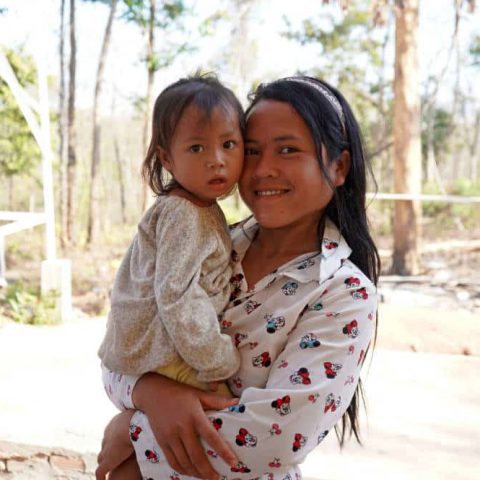
By helping provide essential items like a girl’s birth certificate, you could protect her from early marriage, exploitation and trafficking, and secure a future where she can vote, work and claim her rights.
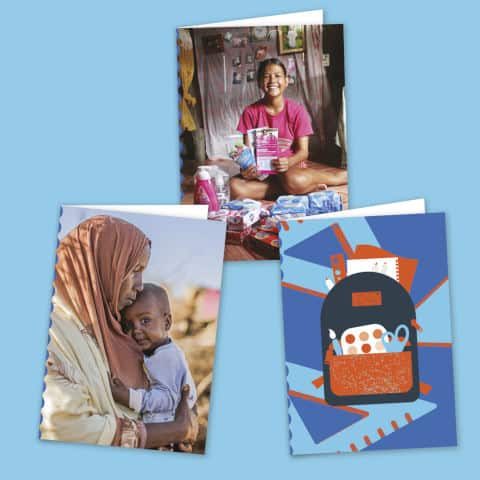
This Bundle of Hope can help treat acute malnutrition in children under five, supply a family with a cooking kit, and provide children with the back-to-school kits they need to continue their education.
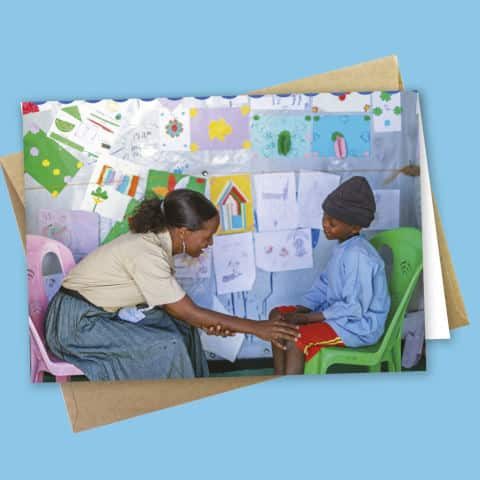
Plan International’s child protection work isn’t just about keeping kids physically safe — we also help them to stay mentally well in times of crisis.
Your support can mean girls and young women around the world are free from violence
Latest news
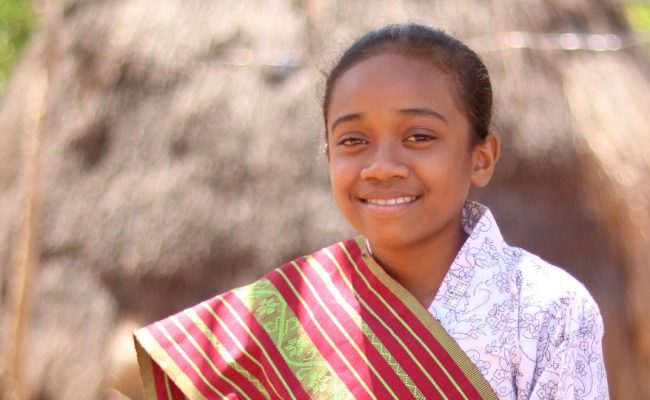
But around the globe, child marriage denies girls the freedom to make their own decisions, be in charge of their bodies, and to have choices and opportunities for their futures.