

Yasmin lives in the world’s largest refugee camp in Cox’s Bazar with her husband and three young children. She fled Myanmar after violence forced her family to leave their home. It took seven days of walking to reach safety in Bangladesh and like many families, they arrived with nothing and began rebuilding their lives in the camps after experiencing loss, fear and trauma.
After her marriage to her husband, her family struggled with severe food insecurity. Her husband was injured in a road accident and could no longer work, the family was left without a reliable source of income.
With limited food assistance and no steady earnings, Yasmin often worried about how she would feed her children. Some days, providing even one full meal was a challenge, and her children were frequently unwell.
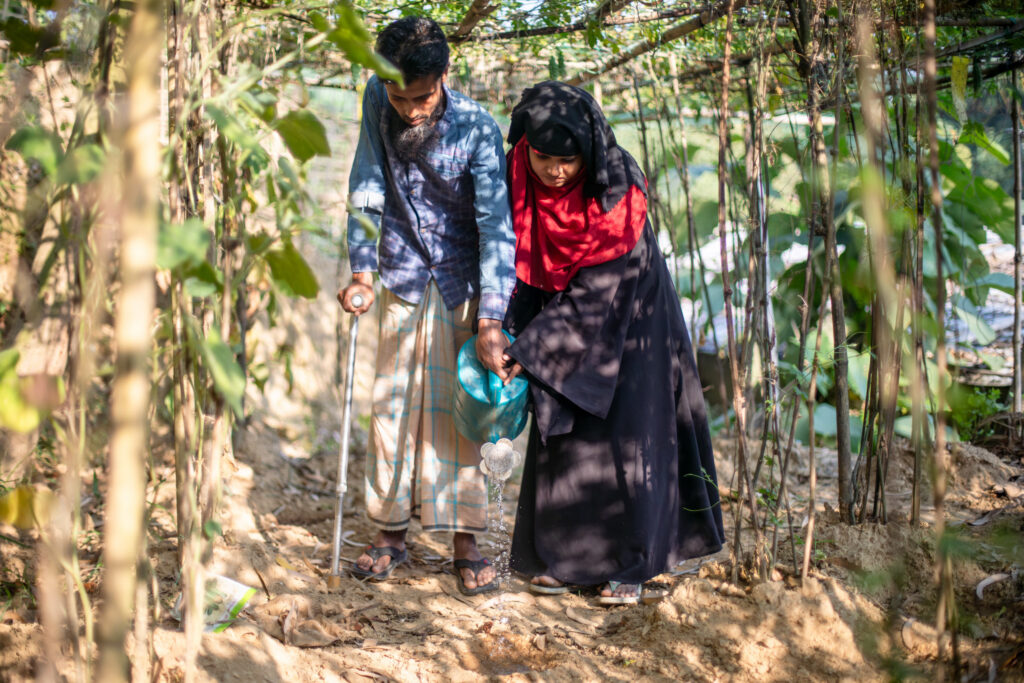
Yasmin’s situation began to change when her family was identified as food insecure during a community assessment supported by Plan International. She shared her wish to grow vegetables so she could feed her children and earn a small income. She was selected to take part in a kitchen gardening programme and received training, seeds and basic supplies to start growing food close to her shelter.
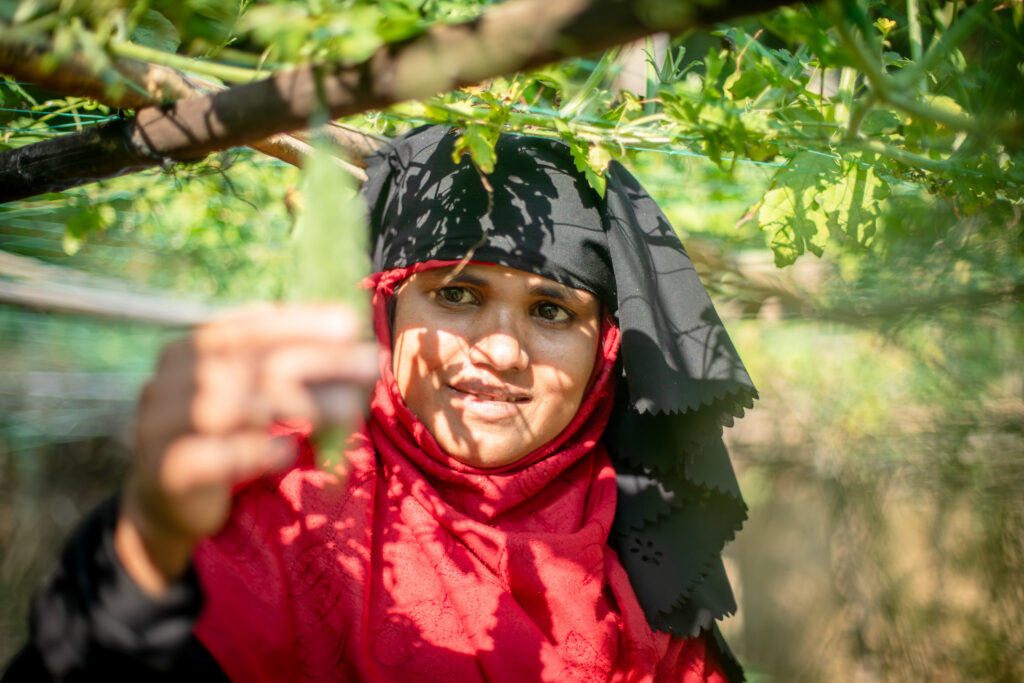
Yasmin began cultivating vegetables and gradually expanded her garden. The produce now helps feed her family every day, and selling surplus vegetables provides extra income. Yasmin says the garden has reduced her stress, improved her children’s health, and allowed her to support their education. Today, she also shares what she has learned with neighbours, encouraging other families to grow food and improve their own food security.
Food insecurity remains one of the most pressing challenges facing Rohingya families in Cox’s Bazar. Years of displacement, restrictions on employment and reduced food assistance mean many households struggle to meet their basic needs. For families with members unable to work in the camps due to illness or injury, the risk of hunger is especially high.
Plan International Bangladesh has been working in Cox’s Bazar since 2017 to support families affected by displacement. Through food security and livelihoods programmes, including kitchen gardening initiatives, Plan and its local partner Friends in Village Development Bangladesh (FIVDB) help families grow nutritious food in small spaces using suitable vegentables.
The kitchen gardening programme provides practical training, seeds and basic tools and equipment, enabling families to grow vegetables for their own consumption and sell any surplus for a source of income. These small gardens help ease pressure on household food supplies, improve nutrition for children, and give families a greater sense of control and dignity.
In the camps, pressures on families are increasing as global funding reduces. As monthly food rations have been cut, initiatives like kitchen gardens have become vital. They help families cope with ongoing uncertainty while building resilience and supporting children’s health and wellbeing in the camps.
Your support can help more refugee women and girls start to build a better future. A future that's built on safety.

Plan International’s Cox’s Bazar resposnse is supported by the Australian Government through the Australian Humanitarian Partnership.