
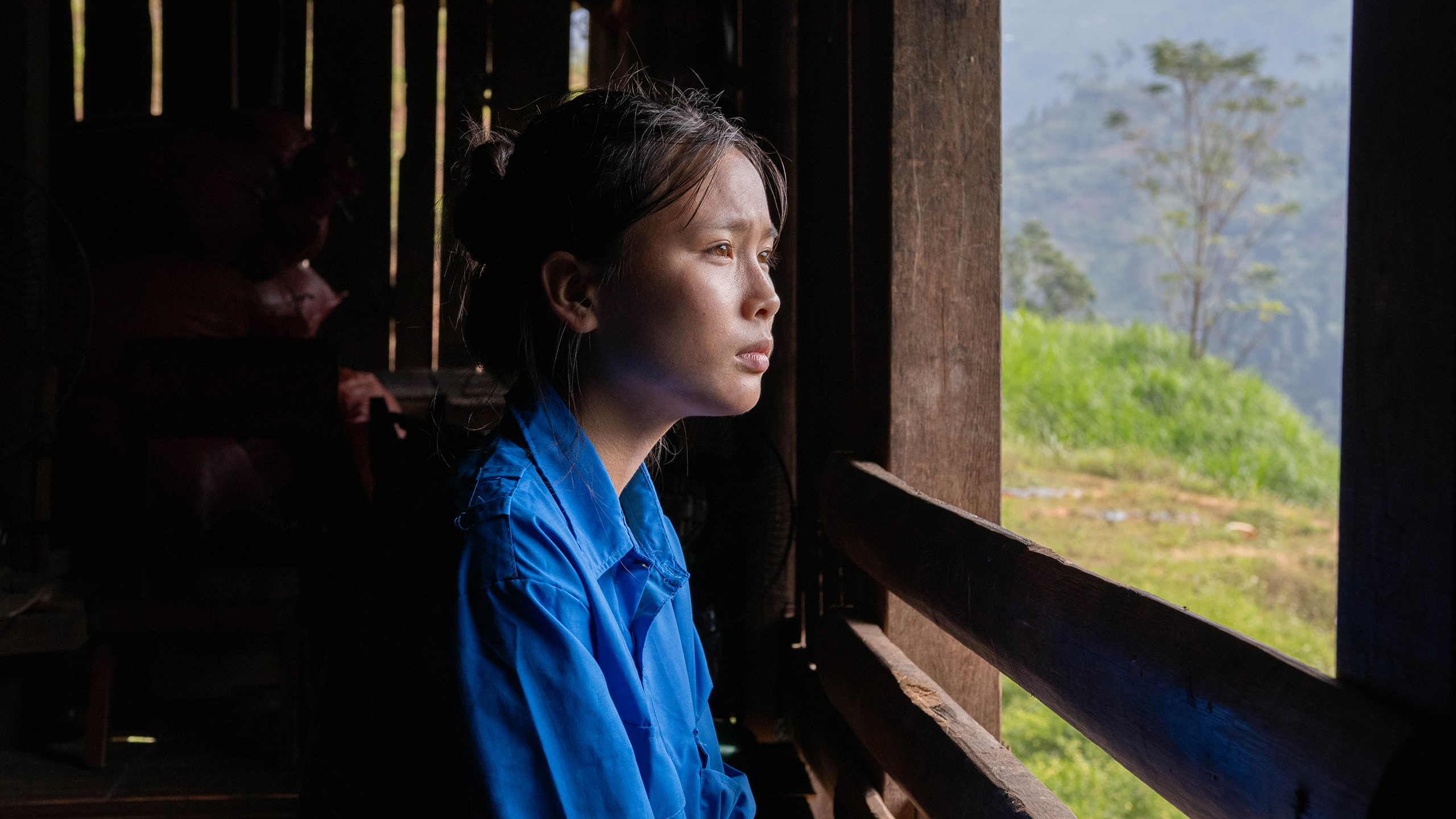
In the remote hills of Tuyên Quang Province, Northwest Vietnam, 15-year-old Ngân faced a choice no child should have to make: accept an arranged marriage or fight for her education. Her story is a powerful reminder of the resilience of girls and the importance of standing up for their dreams.
What kind of girl will I be? Will I achieve my dream? Go to college before finding a job. This is my last year in middle school. Soon, I will take the most important exam of my life to enter high school.
Extract from Ngân’s diary.
Her words brim with hope – but reality struck hard. At the start of the year, Ngân’s mother accepted a dowry from a family who wanted her to marry their son. “It was a great shock for me,” Ngân recalls. “I’ve heard lots of these kinds of stories, but this time it was happening to me. I was terrified and angry. I knew I didn’t want to marry him.”
In rural Vietnam, where tradition still holds sway, her marriage had been arranged through Tu Vi astrology, her dowry quietly negotiated. To question that fate is to challenge everything she’s been taught to accept. In her community, nearly 60% of people were married before the legal age – most of them girls.
Watch the documentary trailer
Directed by filmmaker Hà Lệ Diễm, The Price of Dreams unfolds in Ngân’s own words – through diary entries and reflections – as her teachers and Plan staff join her in a high-stakes conversation with her mother. From feeding chickens and planting seeds to scrolling her phone in solitude, Ngân straddles two worlds – the customs that shape her daily life, and the growing awareness of possibilities beyond them.
One scene between Ngân and her teacher was revisited during filming. It’s an unscripted re-enactment of a real conversation they had several times before. Speaking in their own words, nothing was scripted. This ethical documentary practice helps fill narrative gaps without altering the truth. The goal is authenticity, not performance.
For Ngân, marriage meant the end of her education. When she confronted her mother, Lan, she was crushed by the response. “She said I could wait until I was 18 and still go to school,” Ngân explains. “She also said he is a gentle boy who would be a good husband for me.” Her father agreed. “He said it was good to marry a neighbour.”
Lan believed she was protecting her daughter. “I suffered a lot, and I don’t want you to suffer the same way,” she told Ngân. But for Ngân, this decision felt like a prison sentence. “She doesn’t realise that accepting the dowry makes me suffer just as much as she did.”
Determined to change her fate, Ngân turned to her teacher, Hồng, for help. “Could you please help me convince my mother to return the dowry?” she pleaded. “You and the other teachers could come and talk to her.”
Hồng didn’t hesitate. “You’re one of my best students,” she told Ngân. “Don’t let anything compromise your future. Stay focused on your studies. I will help you.”

Together with other teachers from Ngân’s school, Hồng visited Lan to explain the risks of early marriage. “Don’t you think the boy who paid the dowry may interfere with Ngân’s studies?” Hồng asked. “He could come to school saying, ‘She is my wife.’ Even if it’s not true, he could ruin her reputation. She would be so ashamed that she would quit school.”
The teachers painted a vivid picture of what was at stake. “Ngân should go to high school,” one said. “What a pity if she ends up working in a factory! There you only do manual work all day. Workers have swollen feet as they stand all day long. With a qualification, you can work in an office. It makes a huge difference, and the salary is much higher.”

Lan listened quietly. Finally, she nodded. “Ok, I will give the dowry back,” she said. Two days later, she kept her promise. The gifts – two silver piastres, a bottle of rice wine, and a kilo of pork – worth about €250 were returned. “My daughter is still studying,” Lan explained to the boy’s family. “She doesn’t want to get married. She wants to study. We can’t force her.”
For Ngân, that moment was liberating. “Today, my mother returned the dowry,” she says with a smile. “I’m glad to be free of this commitment. I wish every girl could challenge her parents’ decision to accept a dowry. A wedding arranged by a girl’s parents won’t make her happy. We must be strong to fight these oppressions.”
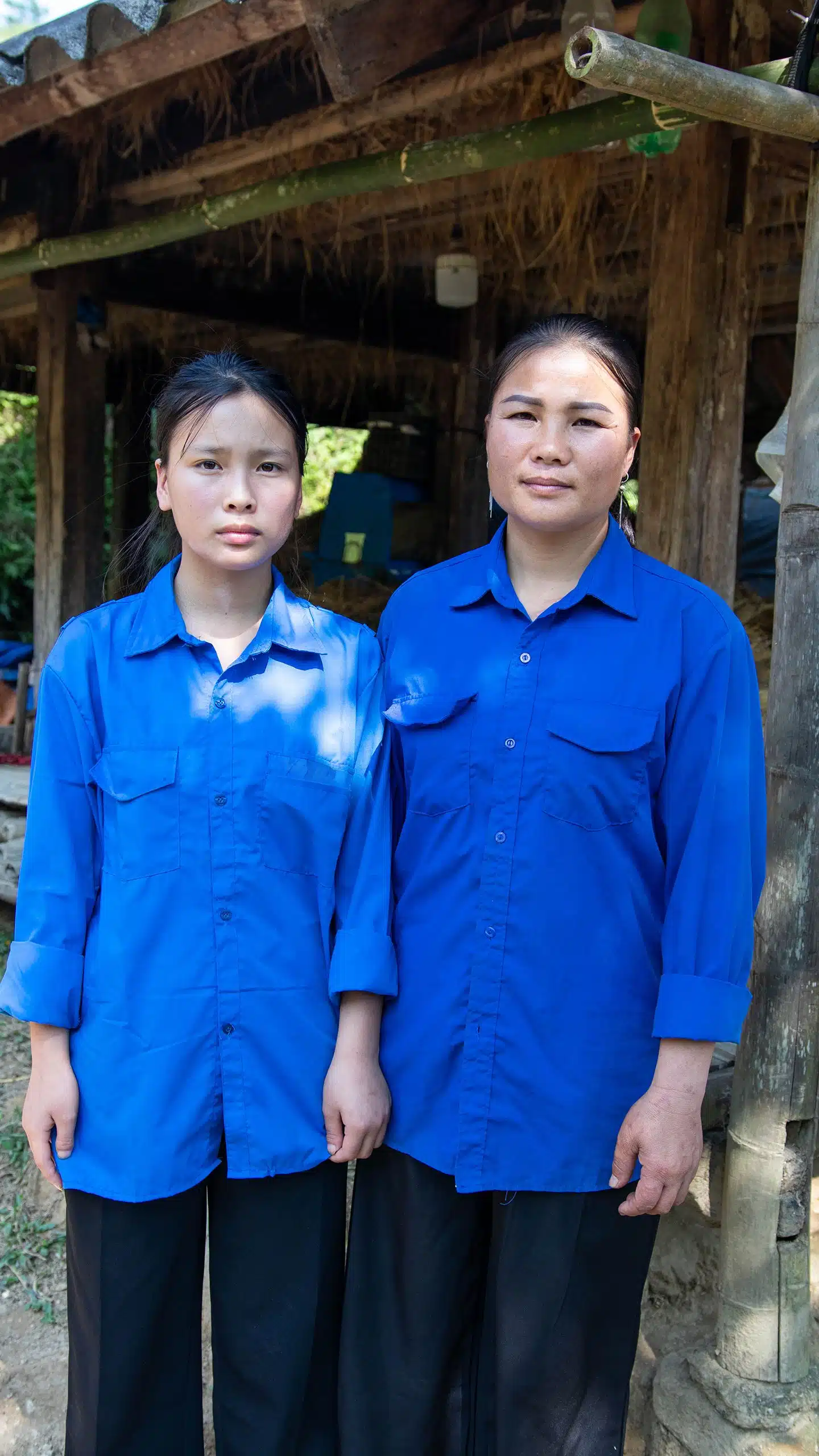
Child marriage remains a harsh reality in Ngân’s region, where almost 30% of children aged 11 to 14 are out of school. A recent study by Plan International found 483 cases of child marriage in the province, with 35 occurring in Ngân’s community alone.
But thanks to Plan International’s efforts – providing school supplies, safe spaces, and clubs like Champions of Change – girls like Ngân are learning about their rights and building the confidence to say no. Plan staff join teachers to visit families and discuss what’s at risk when girls leave school to marry.
Ngân’s hard work paid off. She passed her exams and now lives in a dormitory while attending high school. She’s one step closer to her dream of going to college and seeing the world. Her story is a symbol of hope for thousands of girls facing similar challenges. It shows that with support – from teachers, communities, and organisations like Plan International – traditions can change, and dreams can thrive.