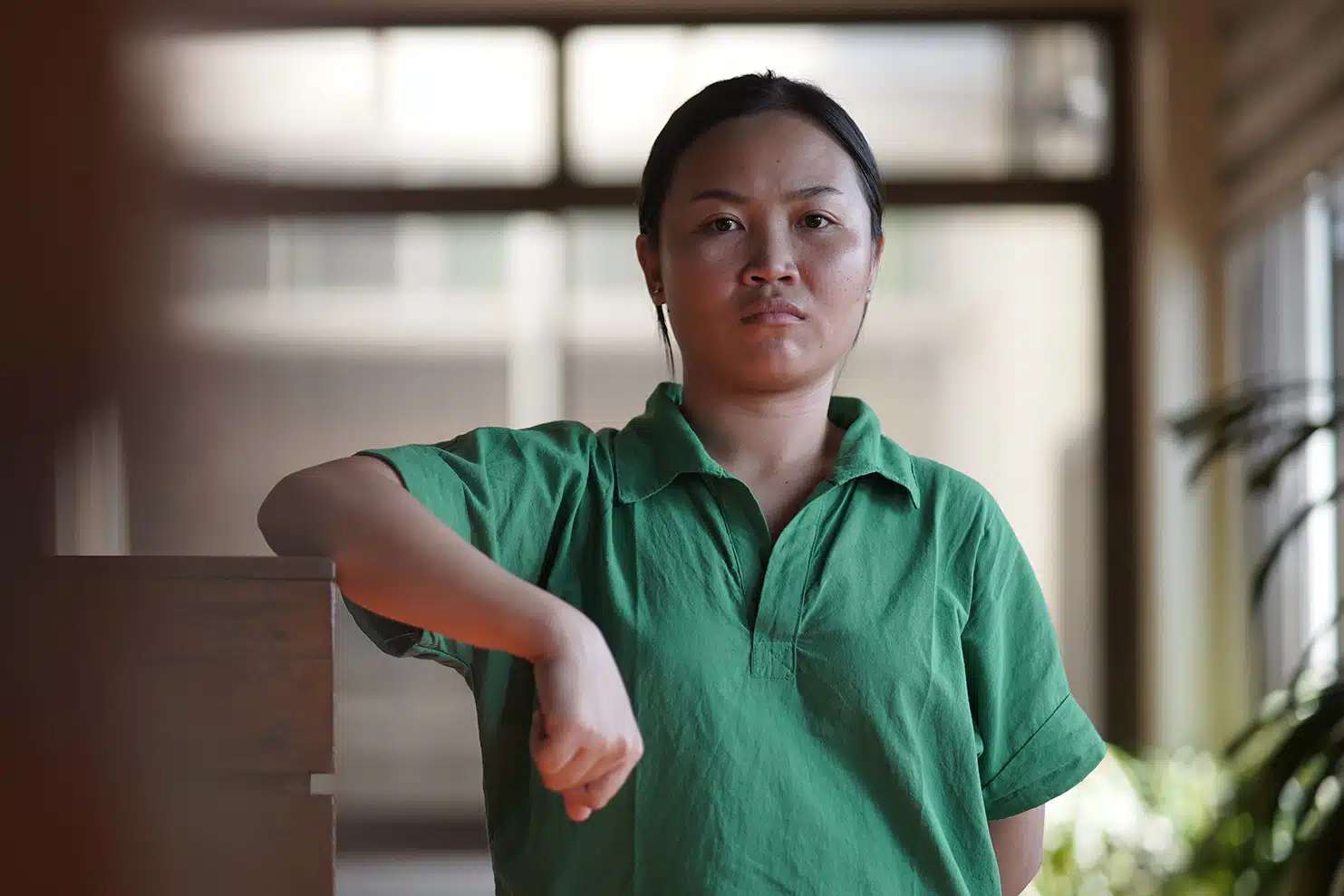
In the coastal municipality of Salcedo, Eastern Samar, Philippines, where the vast Pacific Ocean meets rugged islands, 24-year-old Aprille has turned personal tragedy into a powerful call for global action. Growing up as one of eight siblings in a modest family – her mother a housewife and her father a bus driver – Aprille’s life has been shaped by the relentless rhythm of typhoons. “As we live on an island, we are usually on the receiving end of typhoons,” she says.
From a young age, Aprille eagerly attended training sessions and workshops organised by Plan International. These weren’t just educational outings; they were gateways to understanding the looming threat that climate change poses to vulnerable coastal communities like hers. She learned about environmental protection, disaster risk reduction, and the rights of children and young people. Her siblings, curious about her activities, often joined her when they could.
My mother wants all her children to have opportunities. She knows we will learn things that can’t be taught in school. She always tells us that the knowledge and experience we gain will serve as our armour when we face the real world.
But knowledge alone couldn’t prepare her for the fury of Typhoon Yolanda, known internationally as Haiyan, which struck in November 2013. At just 13 years old, Aprille dismissed the warnings at first. “They said it was going to be a super typhoon – not just a typhoon – but we didn’t take it seriously,” she admits. “On the day it was due to make landfall, we were still playing around.”
When the storm intensified at around midnight, her family took shelter in a local day care centre. The winds howled like a “whistling monster”, shattering windows and flooding the room. Terrified, Aprille held her younger brother closely. “I was very scared. I was cold and shivering, but I had to carry my brother. I actually thought that this might be the end.”
During that chaotic night, regrets flooded her mind, but not for herself; she was worried about her family. “I wasn’t scared for myself, but I was thinking that if I died, my brother wouldn’t be able to play anymore. My other siblings wouldn’t be able to experience the things I experienced or learn the things I learnt because of the super typhoon.”
The storm’s devastation was total: homes were obliterated, infrastructure was in ruins and lives were forever altered. Aprille’s family home was destroyed, forcing them to cram into an overcrowded school for three months. “There were three families in one room,” she describes. “It wasn’t sanitary. It was also uncomfortable because there was nowhere to change our clothes, so we had to wait for others to finish using the restroom. We also washed outside the room or in the rain or in the ocean.”
Yolanda wasn’t an isolated event; typhoons are a recurring occurrence in Salcedo, a municipality of 41 barangays, many coastal and exposed to the Pacific’s wrath. Residents grapple with repeated destruction, making recovery a constant challenge. For Aprille, the experience was a wake-up call. “When Yolanda struck, we realised that what we had learnt during training and seminars was true. It’s not a joke. What we were told was really true.”
Emerging from the trauma, Aprille channelled her fear into action, determined to protect others, especially children, from experiencing similar horrors. In the storm’s aftermath, Aprille and five other young survivors founded the Caridad Active Movers for Progress (CAMP) in 2013. This youth-led group focuses on raising climate awareness and promoting sustainable behaviours in their community.
With support from Plan International’s Small Grant Initiative on Disaster Risk Reduction, CAMP has launched initiatives such as the Trash Bin Project, which teaches young people about waste management and partners with local officials. They organise coastal clean-ups, church events and youth celebrations such as Valentine’s Day carnivals and Christmas gatherings, combining entertainment with education.
Aprille’s leadership skills flourished further when she became a teacher, incorporating lessons on climate change and youth rights into her curriculum. Once shy at primary school, she is now a confident speaker, leading seminars and inspiring her peers.
My exposure to different societal issues from a young age, and learning how we can participate in and help our community, has ignited my passion to learn more about our rights and responsibilities as children and young people.
Today, Aprille’s message resonates beyond her island. She is urging global leaders, governments and corporations to take decisive action. “I want the rest of the world to take this seriously. I want government officials and people in big companies to take it seriously because it’s serious for us. You might not have experienced Typhoon Yolanda or another disaster, but for those affected by disasters caused by the climate crisis, it’s very serious.”
Looking ahead, Aprille hopes for a world where the climate emergency is prioritised, with more young people and women involved in decision-making. “I hope more women will be given positions of power where they can actually effect change,” she says. “I’d like to see women making the change themselves.”