Economic empowerment
From a young age, many girls are taught that their role is at home, not in the workplace. They are taught that men are the breadwinners, and they are the carers. They are excluded from education and training.
But when a girl is given the tools and resources to pursue the career and life she wants, she doesn’t just change her own life. She helps break the cycle of poverty for good.
Photo: Saratou, 17, with some of the garments she has made in her sewing workshop. © Plan International / Fabien Akakpo
When you empower girls and young women, everyone thrives
We believe that poverty shouldn’t stop a family from feeding their family or sending their children to school. That women and men should share control over finances. That girls aren’t forced to carry the burden of domestic labour.
All children deserve to go to school, follow their dreams and pursue a career that they want. Education is at the heart of this. But for young people who missed out on an education during their formative years, our vocational training and youth economic empowerment projects provide a second chance for young people to develop skills and knowledge that can help them find employment or inspire them to become their own boss.
How we’re helping
We work to provide vocational training to young people and help them set up a business. We establish savings clubs to give communities a safety net and empower women with financial literacy training. And we work with families to make sure that decisions about money are made together.
When girls are educated, it means an extra $21 billion a year for their economies. This means more jobs for everyone, and a reduction in overall poverty. But outside of the economy, vocational training and financial independence can completely transform an individual woman’s life.
Savings group empowers women in Kibera’s slums
In Kibera, an informal slum settlement in Kenya’s capital Nairobi, Maureen is a member of the Obuto savings group. Trained by Plan International and Horn of Africa, the women’s group meet once a week to save a portion of their earnings. They also pay into a social fund which is set aside for members in case of emergencies such as sickness, death and fire.
Whatever is left in the social fund at the end of the year is used to start income-generating projects. “We have a car wash, where the ladies work. We have a bathroom and toilet project, where we sell water, people shower and go to the toilet there. We also make soap,” says Maureen adding that at the end of the year, all profits are shared amongst the 30 group members.
Our Work
Support girls and their families to thrive.
The beekeeper breaking gender barriers in El Salvador
17-year-old Silvia lives in a rural community in Chalatenango department, El Salvador. Life here can be tough for young people, with limited job opportunities and low incomes. Most make a living from farming.
From a young age, Silvia helped her family run their beekeeping business. Her grandfather taught her father the trade and he, in turn, taught her. In 2021, only 46.8% of the female working age population were in employment.
I want to get ahead because if you don’t look for a way out, you will never get anywhere and that is what motivates me, I want to be able to move forward.
Photo: Silvia, 17, ready to check her beehives. © Plan International
Entrepreneurship is an investment in children’s future
In 2018, Bandiba had to flee her village in eastern Burkina Faso as insecurity increasingly threatened her life and that of her family. When her sister-in-law’s husband was killed by armed men, the family made the decision to move to Fada N’Gourma, the regional capital which was 120km away.
When we arrived in Fada, we slept at the bus station for three days. Then we stayed with one of my husband’s uncles. Afterwards we were allocated a tent, where we lived for two years. It was really hard to get enough to eat. Through the distributions, we received some food, but it wasn’t enough.
As the conflict worsened, Bandiba’s husband decided to use their savings to buy a plot of land and build a small house. This provided the family with a permanent home, but Bandiba still needed a way to earn an income. Through a three-month course, Bandiba was able to start a small sewing enterprise in her home.
In 2022, Bandiba was selected to take part in an entrepreneurship training programme run by Plan International. Following skills development training in areas such as financial literacy, good savings practices, marketing and future planning, Bandiba received a grant of 150 Euros to scale up her business.
Two years on, Bandiba has become well known in her community as an excellent seamstress. She is now financially independent and can make plans for herself and her children.
Getting the children ready for school in the morning makes me very happy because it means preparing them to succeed. It gives me hope. I’m no longer afraid of the future, I know that I will be happy.
More than 5,300 people, including around 3,700 women, received financial support to set up income generation activities in four regions of Burkina Faso.
Photo: Bandiba, 24, in her sewing workshop. © Plan International / Souleymane Drabo / Tamani Filmso
Support women and girls with a Gift of Hope
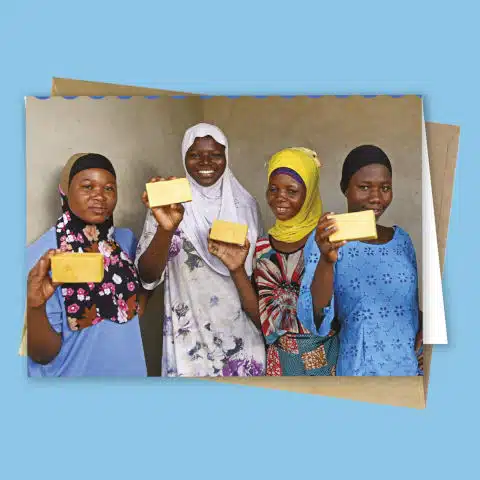
When a woman learns a new skill and is given the tools to establish her own small business, something amazing happens — she can make decisions about how and where her money is spent.
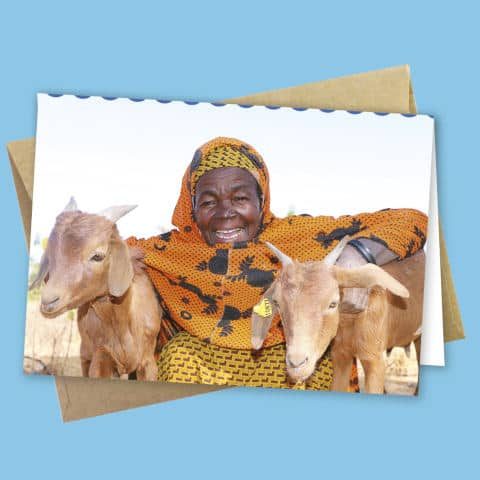
Goats are an investment in a family’s future. Providing income and a source of food, two goats can sustain a family, and increase their connections through trade.
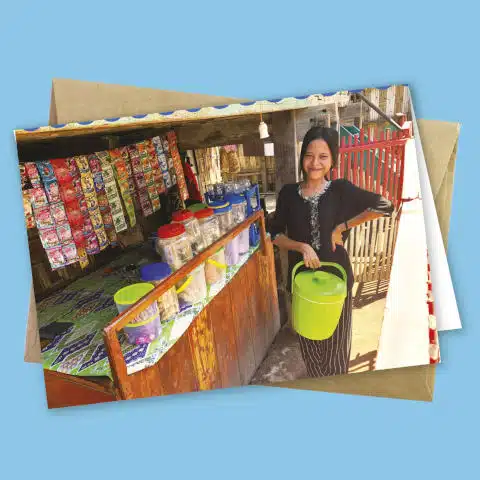
This gifts shows how a small start up fund can support a young woman to transform her ambition into a food business.