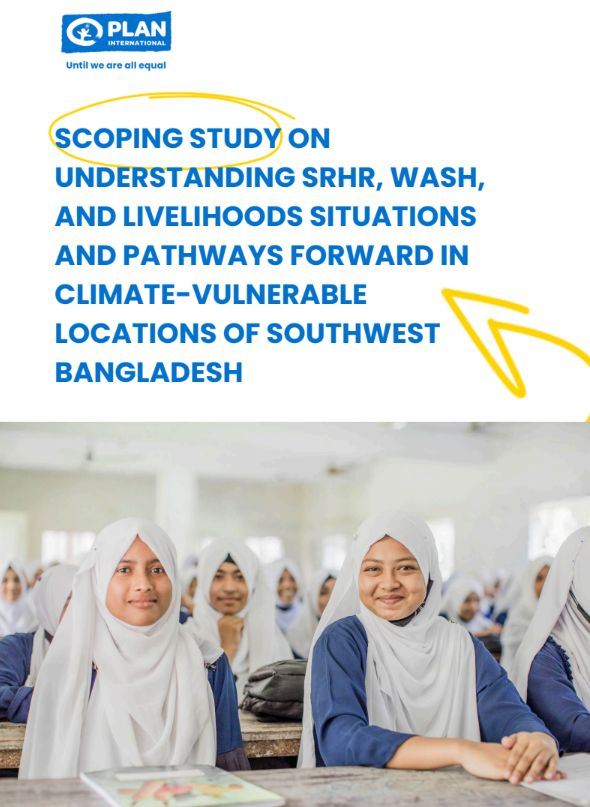
Scoping Study on Understanding SRHR, WASH, and Livelihood Situations and Pathways Forward in Climate-Vulnerable Locations of South-West Bangladesh

Bangladesh’s southwest coastal districts of Khulna and Satkhira are experiencing intensifying, overlapping climate shocks driven by cyclones, floods, riverbank erosion, and salinity intrusion. This scoping study examines how these climate stressors are reshaping Sexual and Reproductive Health and Rights (SRHR), Water, Sanitation and Hygiene (WASH), livelihoods, and gender-based vulnerabilities, with a particular focus on adolescents, young people, women, and marginalized groups. The study draws on a mixed-methods approach, including a household survey of 1,260 household respondents across four highly climate-vulnerable upazilas, complemented by FGDs, KIIs, and IDIs to capture lived experiences and systemic gaps.

Related Publications and Reports

COP31 Submission: Delivering for girls and young women on the frontlines of the climate crisis

Girls are on the frontlines of the climate crisis. Across the Indo-Pacific, climate impacts, rising energy costs, and economic instability are making it harder for girls to eat, stay in

Girls on the Frontline

This summary document presents research findings from a collaborative partnership between Plan International Australia and the University of Technology Sydney’s Institute for Sustainable Futures (UTS-ISF), co-delivered in collaboration with Plan