Water, Sanitation and Hygiene (WASH)
Clean water changes the world.
Access to safe water saves lives. Yet every day, nearly 2 billion people around the world are unable to access it (WHO). Without clean water, children and their families are at risk of life-threatening illnesses like cholera and typhoid. These health risks are amplified without access to toilets and sanitation facilities. But we’re working to change this.
Photo: Girls use one of the handwashing facilities constructed by Plan International. © Plan International / Tilak Gaha Magar
Effective sanitation and hygiene are essential to children’s health
Providing a community with access to clean water is the easiest way to prevent a whole host of illness and diseases.
Girls are particularly impacted by inadequate access to water and basic sanitation. They’re often the ones who are responsible for collecting clean water, and if they’re menstruating, poor facilities mean they are exposed to health complications and violence.
In communities without private and safe bathroom facilities, open defecation is often commonplace, which leads to infected water supplies and disease. Adding to this, inadequate hygiene practice like not washing hands with soap can lead to life-threatening illness.
How Plan International are helping
Plan International work to provide clean water, the materials to build toilets and sanitation facilities. But we also work with communities to make sure they are used correctly and maintained, because providing toilets doesn’t guarantee people will use them.
By training community leaders, showing people how to build their own toilets, and teaching children and their families about good hygiene practices like handwashing with soap, we’re creating change that lasts.
Our research
Our program work is informed by evidence, and we’re always learning. Read our recent WASH research reports.
Sanitation access in rural Cambodia
12-year-old Seila and her family lived without proper sanitation. With six family members in the household, the area around Seila’s home was contaminated by human waste creating unhealthy living conditions. The majority of households in Seila’s village did not have home latrines.
I feel very happy to have a proper latrine to use especially during the rainy season. I don’t feel scared of being attacked anymore. I usually look after the cleanliness of the latrine by cleaning it every day.
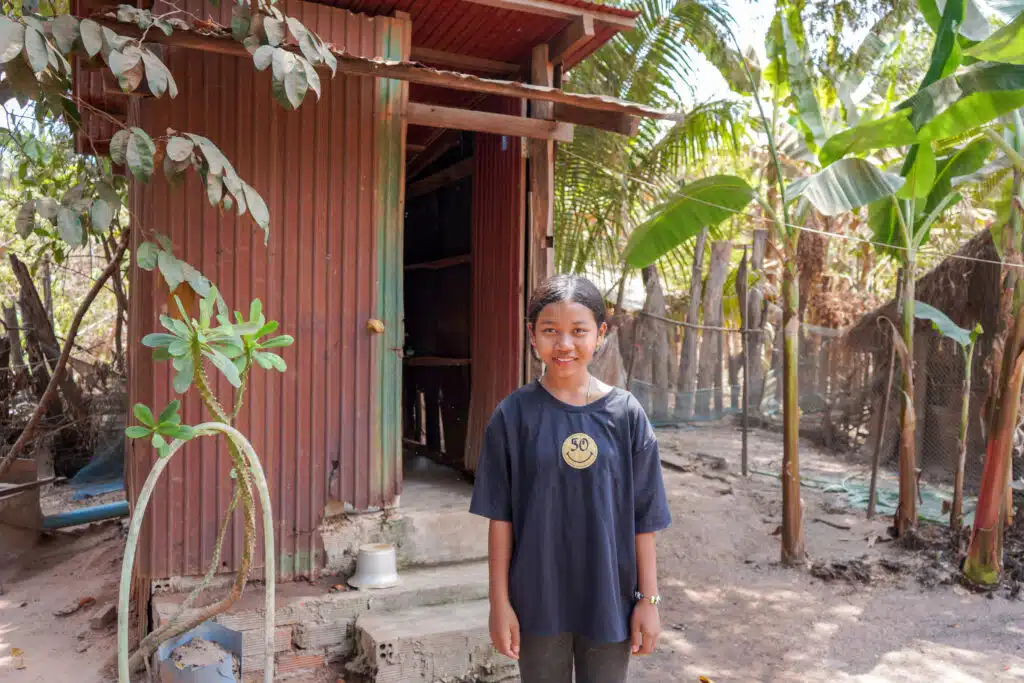
As part of the project, grants were provided to families who were unable to afford to cover the costs of building their own latrine. Seila’s family qualified for a subsidy which they used to pay for the construction of the support structure that contains latrine pan, slab, ring, and pipe. The family then just had to cover the costs of building the wall and ceiling of their latrine. As a result, 116 families in Seila’s village now have access to latrines
Photo: Seila now has access to clean water and a toilet. © Plan International
Our Work
- Child protection
- Climate action
- Early childhood development
- Economic empowerment
- Emergencies
- Ending child marriage
- Ending Female Genital Mutilation (FGM)
- Gender-based violence
- Girls’ education
- Gender Compass
- Online safety
- Pacific Girls in a Changing Climate
- Safe cities
- Sexual reproductive health and rights
- Water, sanitation and hygiene
- Child protection
- Climate action
- Early childhood development
- Economic empowerment
- Emergencies
- Ending child marriage
- Ending Female Genital Mutilation (FGM)
- Gender-based violence
- Girls’ education
- Gender Compass
- Online safety
- Pacific Girls in a Changing Climate
- Safe cities
- Sexual reproductive health and rights
- Water, sanitation and hygiene
Our impact in 2024 Financial Year
Learn more in our annual impact report.
Water and sanitation affect a girl’s health, safety and education
We know that everyone is affected by inadequate access to clean water and safe sanitation. But young women and girls are particularly at risk.
In many countries, girls are responsible for spending large parts of the day finding and fetching water for their families, which keeps them out of school and puts them in danger of violence if they are out alone. The lack of private and decent sanitation facilities to manage their periods at school can also contribute to girls dropping out and permanently ending their education.
COVID-19 and other crises make sanitation and hygiene more important than ever
Practising good hygiene is the easiest way to provide the spread of illness and infection. In the face of COVID-19, access to water, soap and hygiene products has never been so important.
This is also true of extreme weather events such as floods or cyclones, which can cause water contamination and increase the spread of water-borne diseases. By making sure all communities are equipped with improved water and sanitation systems, and providing additional support during crises, we can keep more children safe.
Photo: Leidy, 9, washes her hands at her home in Cusco, Peru. © Plan International / Fiorella Ramos
Help support our work around the world
Give a Gift of Hope
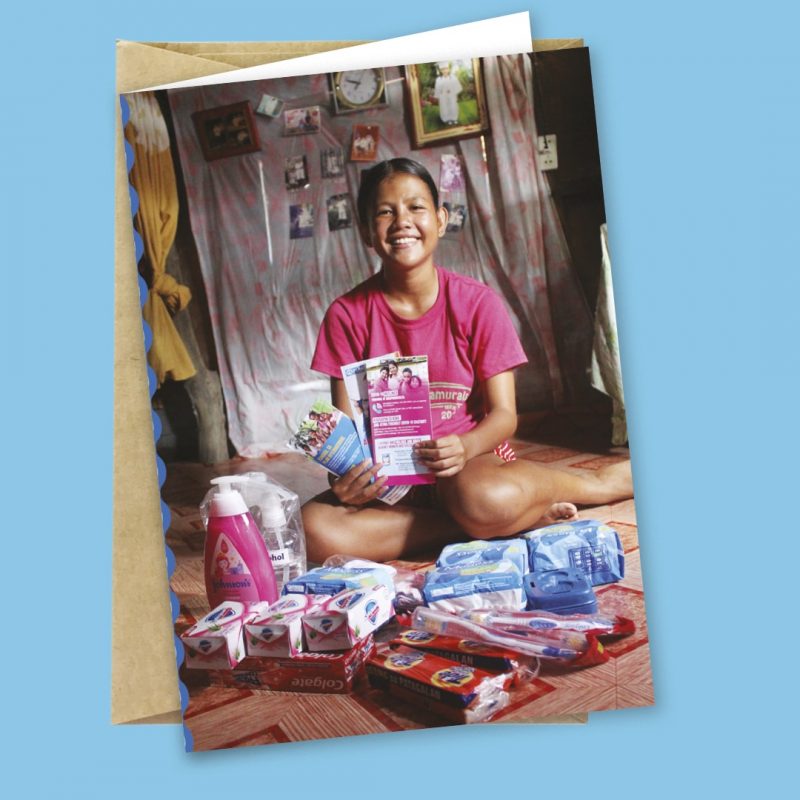
This gift represents a kit which provides children and their families with soap, toothbrushes, shampoo and toilet paper – the hygiene essentials necessary to prevent illness.
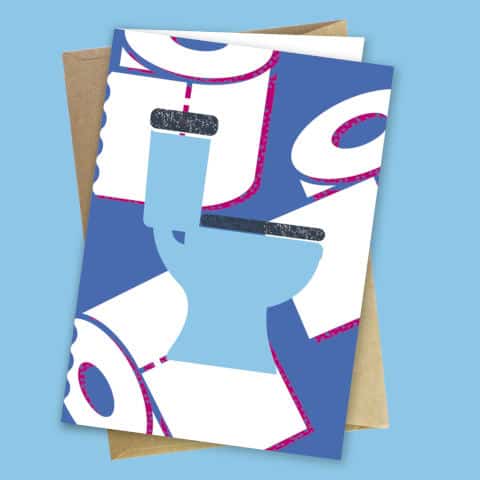
This gift shows how supplying materials for locals to build a toilet can halt the spread of deadly disease for children and their families.
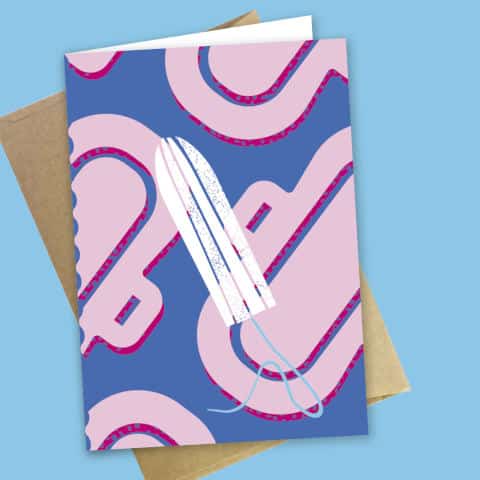
By supporting girls to access menstrual hygiene classes, you can help girls better understand their periods, make their own reusable pads and take charge of their bodies.