

15th April 2026 marked three years since the start of Sudan’s devastating conflict, and the resulting displacement crisis effecting the entire region. 11.6 million people have been displaced. More than 4 million, mostly women and children, have fled to neighbouring countries including Chad, South Sudan, Ethiopia, Egypt and the Central African Republic.
In Chad there are approximately 1 million refugees, with more still crossing the border when they can. While some camps in Chad are well established, they remain unsafe at night due to limited lighting, restricted access to shared latrines, and rising tensions due to overcrowding. And now with pressure on aid budgets around the world, residents of these camps are reporting reduced food assistance and limits on critical child protection and education services. This heightens the risks of child exploitation, family separation and child marriage and also limits children’s access to safe learning spaces.
22-year-old Azraa was in her final semester of medical school in Sudan, when the conflict forced her to flee with her elderly grandparents. The journey to Chad was terrifying, and she arrived unsure whether her mother and younger brother had survived. Though they were reunited months later, her older brother remains missing.
Three years on Azraa now works in a child‑friendly space in the camp, established by Plan International and our local partners, supporting children and adolescent girls. She helps new arrivals (children and adolescent girls) who often arrive distressed and anxious. Through play, art, and song, she offers a sense of safety and healing. She also encourages them to attend schools in the camp, understanding that education is essential to rebuilding their future.
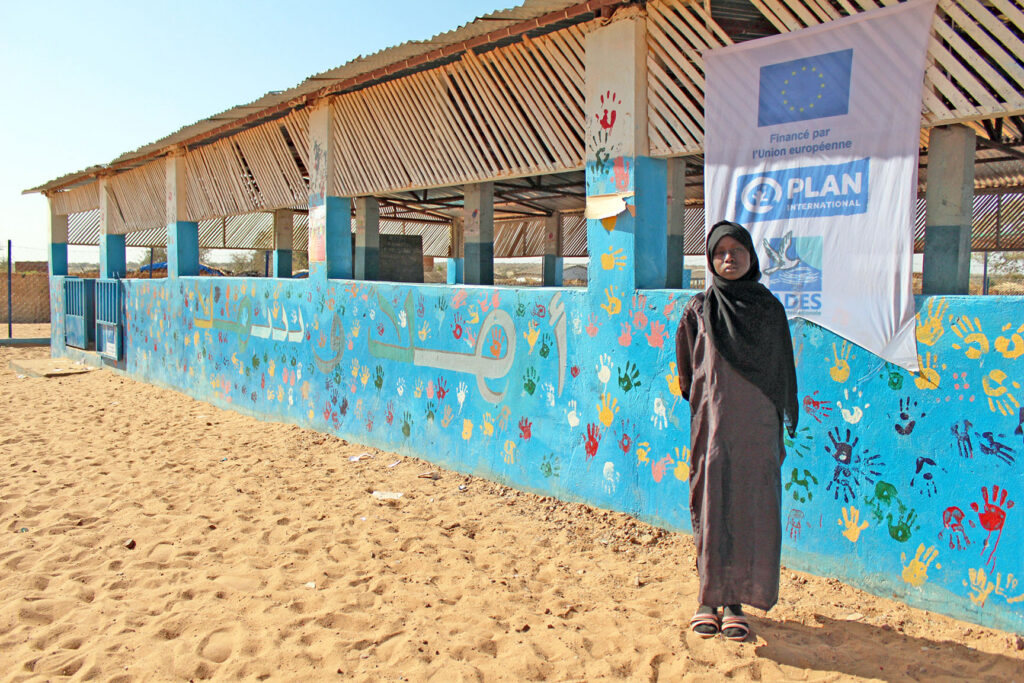
“Here we play with the children; we speak with them and try to reassure them not to be afraid, and we encourage them to study here in the schools in the camp. They don’t want to go to school when they first arrive… they are thinking about Sudan and worry if the schools are good, but we tell them to start studying, because education is education – it does not matter if it is here in Chad or there, back in Sudan. I tell them if we want to return back to Sudan in the future, we should learn here today.”
Having seen the needs of her community, Azraa has channeled her thwarted medical ambitions into a different kind of healing – as a supervisor for the child protection mobile team in the camp. Her dream remains as clear as it was before the war: she wants to return to the halls of a hospital and finally complete the medical degree that was so abruptly taken from her. Until she can return to her studies, she pours her dreams into the children she serves ensuring that the next generation of Sudanese youth and leaders are cared for and protected.
Main image: Plan International / Armstrong Too