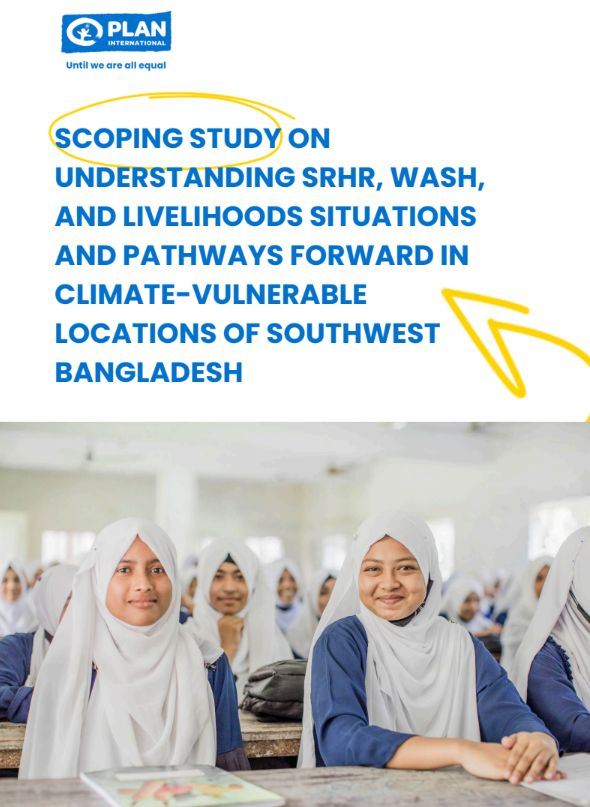
Bangladesh’s southwest coastal districts of Khulna and Satkhira are experiencing intensifying, overlapping climate shocks driven by cyclones, floods, riverbank erosion, and salinity intrusion. This scoping study examines how these climate stressors are reshaping Sexual and Reproductive Health and Rights (SRHR), Water, Sanitation and Hygiene (WASH), livelihoods, and gender-based vulnerabilities, with a particular focus on adolescents, young people, women, and marginalized groups. The study draws on a mixed-methods approach, including a household survey of 1,260 household respondents across four highly climate-vulnerable upazilas, complemented by FGDs, KIIs, and IDIs to capture lived experiences and systemic gaps.