

Where the pavilions flood and burn:
My fever dream at UN climate conference COP30
When diplomacy drags its feet, the real momentum comes from the margins.


Eezu Tan is a Plan International Australia Youth Activist Alumni.
You can follow her work on LinkedIn
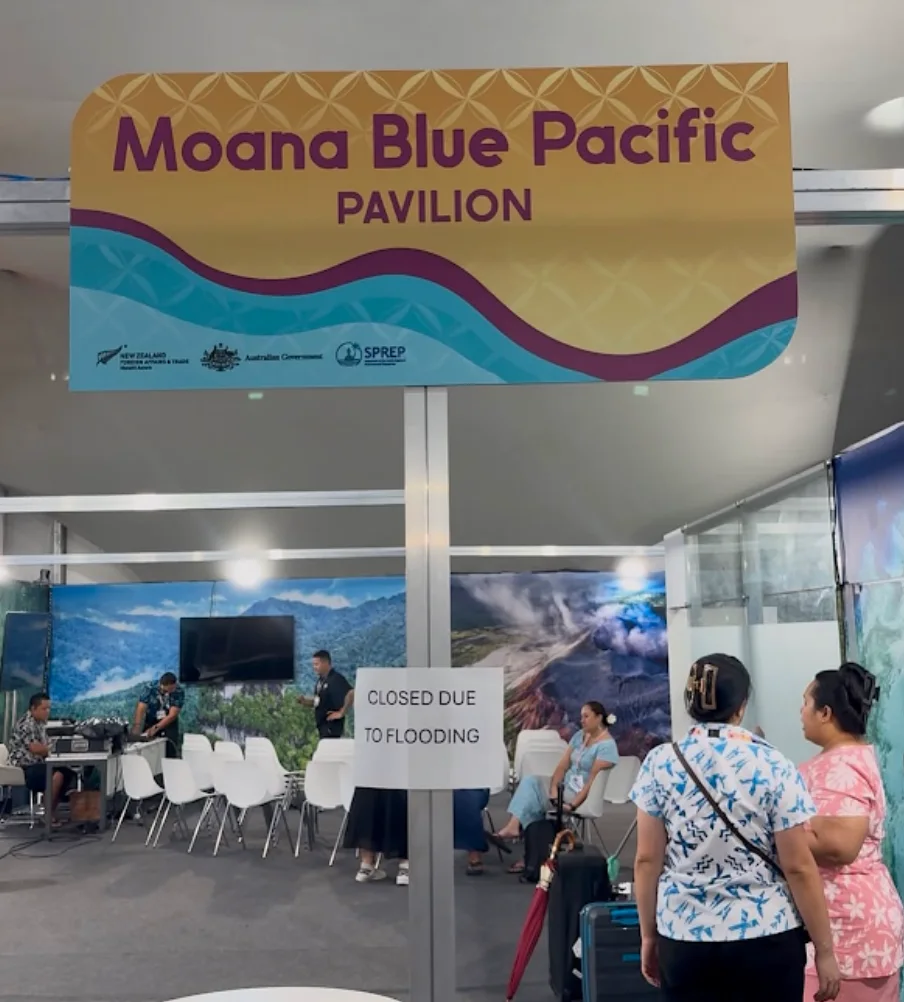

Attending the UN climate change conference COP30 in the Amazonian city of Belem was a fever dream. On day one, I bump into Jacinda Ardern. On day eight, the Pasifika pavilion floods. On day ten, the East African pavilion catches on fire. It's flames travel across the venue, sending tens of thousands of attendees bolting for the exit. The irony couldn’t be clearer - climate change is here and lower income nations will be the first to go if nothing is done.
What actually happens at the UN negotiations?
Given the global nature of climate change, I came to COP wanting to understand how almost 200 countries can agree on a path forward. The power dynamics are as expected - petrostates opposed mentioning the energy transition in the Just Transition negotiation track. Small Island Developing States urge developed nations to scale up climate financing, powerfully noting that small island nations are forced to “fix a climate crisis we did not cause”.
I found it fascinating to observe not just what is spoken, but what is unspoken in the negotiation halls. The negotiators would preface their desire for a good faith, open and honest discussion. Yet, their justifications would be hidden in lengthy formalities that feel desperate to hit a word count. In the negotiation track for the Global Stocktake - a mechanism for countries to track and report progress towards the 1.5C Paris Agreement, petrostates waffled for ten to fifteen minutes on what a multilateral “dialogue” should be - taking up precious time in a one hour discussion. Of course, there was no mention of their reliance on fossil fuels as the world’s largest oil exporter. That would be far too overt for an “open and honest” discussion.
A negotiator told me that this delay tactic is pretty common. The idea is that you take up a lot of air time to prevent productive discussions from happening. If no progress is made, the discussion simply gets pushed to next year.

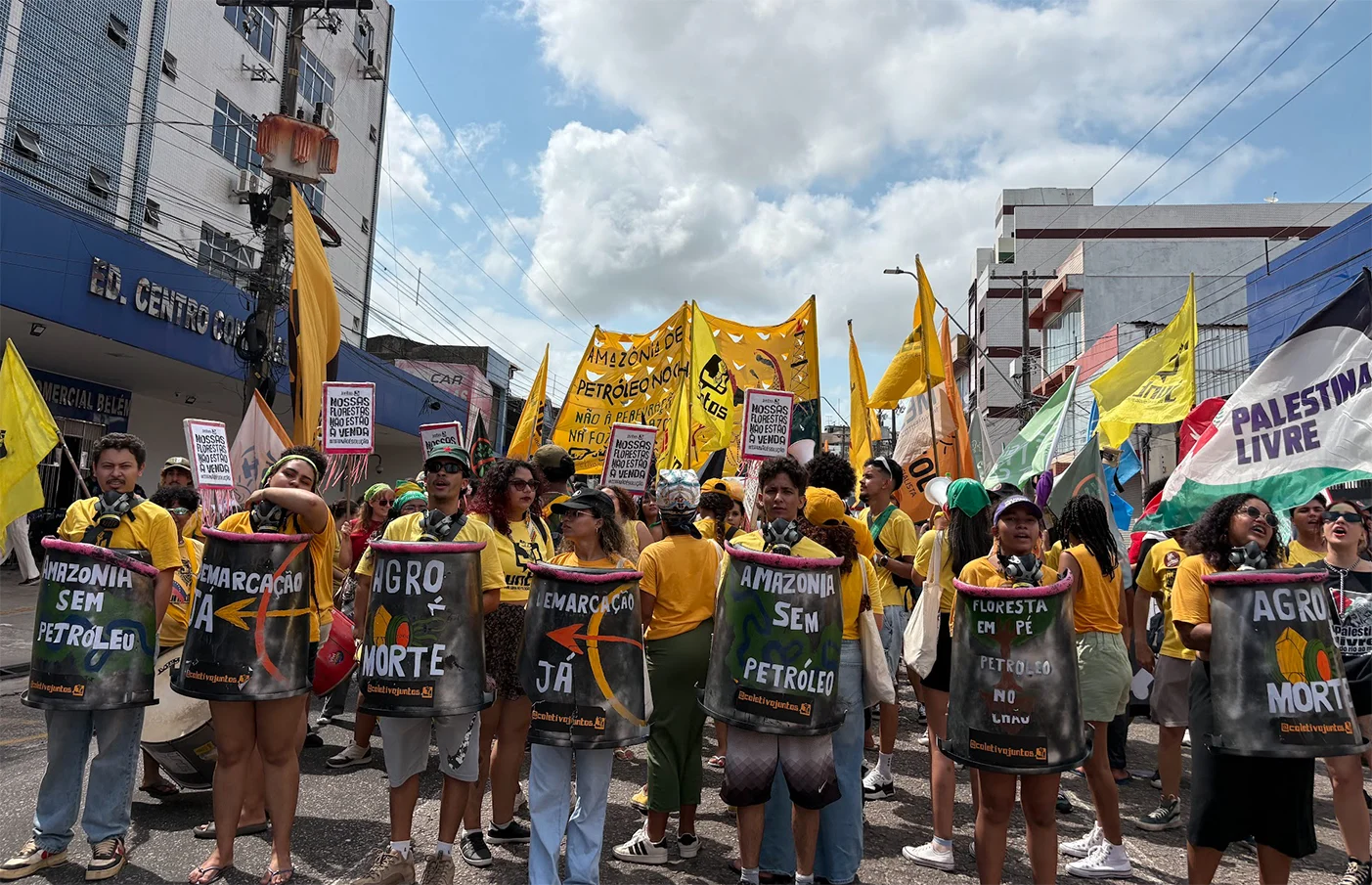
People marching at the People’s Summit protest. Image: Eezu Tan
People marching at the People’s Summit protest. Image: Eezu Tan
What are the wins of COP30?
Despite the demoralising process, COP30 has modest wins for the climate - some of which include:
- 118 countries representing 2/3rds of emissions submitting a strengthened national climate plan
- US $300M committed to strengthen climate-health resilience as per the Belem Action Health Plan
- Launch of Global Initiative for Information Integrity on Climate Change to address climate misinformation
- A Just Transition Mechanism protecting workers and communities as they shift to clean energy
- More than 80 nations like Australia, the UK and many EU countries backing the inclusion of the “transition away from fossil fuels” in the Belem Declaration on the Transition Away from Fossil Fuels. Although this did not make it into the final Mutirao text, it sends a powerful signal to the rest of the world
For anything to pass, all countries must unanimously agree on the text. Naturally, this means that we must solve for the lowest common denominator (as in - what is the least controversial proposal that everyone can agree on?).
It’s the reason why COP30 faces criticisms such as no mentioning of fossil fuels in the final text, the adaptation finance goal being pushed back by five years from 2030 (a time frame that significantly matters for countries already underwater), and the omission of a deforestation roadmap (at a COP situated right next to the Amazon!) Although multilateralism is important, I’ve learnt that these negotiations are simply laggards of climate action.
So, who are the real leaders of climate action?
At the People’s Summit march, I walk alongside Indigenous leaders from the Amazon, Australia and the Pacific. Sweating in 30 degree heat, thousands of protesters march to the gates of COP30. An Amazonian elder in a headdress walks up to us welcoming us to his land, and extending the Indigenous solidarity to my First Nations Australian and Pasifika friends.
Indigenous people take care of 80% of the world’s biodiversity and forests, despite comprising just 6% of the population. While this year had the largest Indigenous attendees with more than 3000 delegates out of ~50,000 attendees, their formal recognition at COP is still minimal as the UN remains a Western dominated space. All negotiations are hosted in English, and only some rooms offer live translations. The “best available science” that COP processes demand are often rooted in Western academia and neglect traditional knowledge systems that have listened to our natural ecosystems for thousands of years.

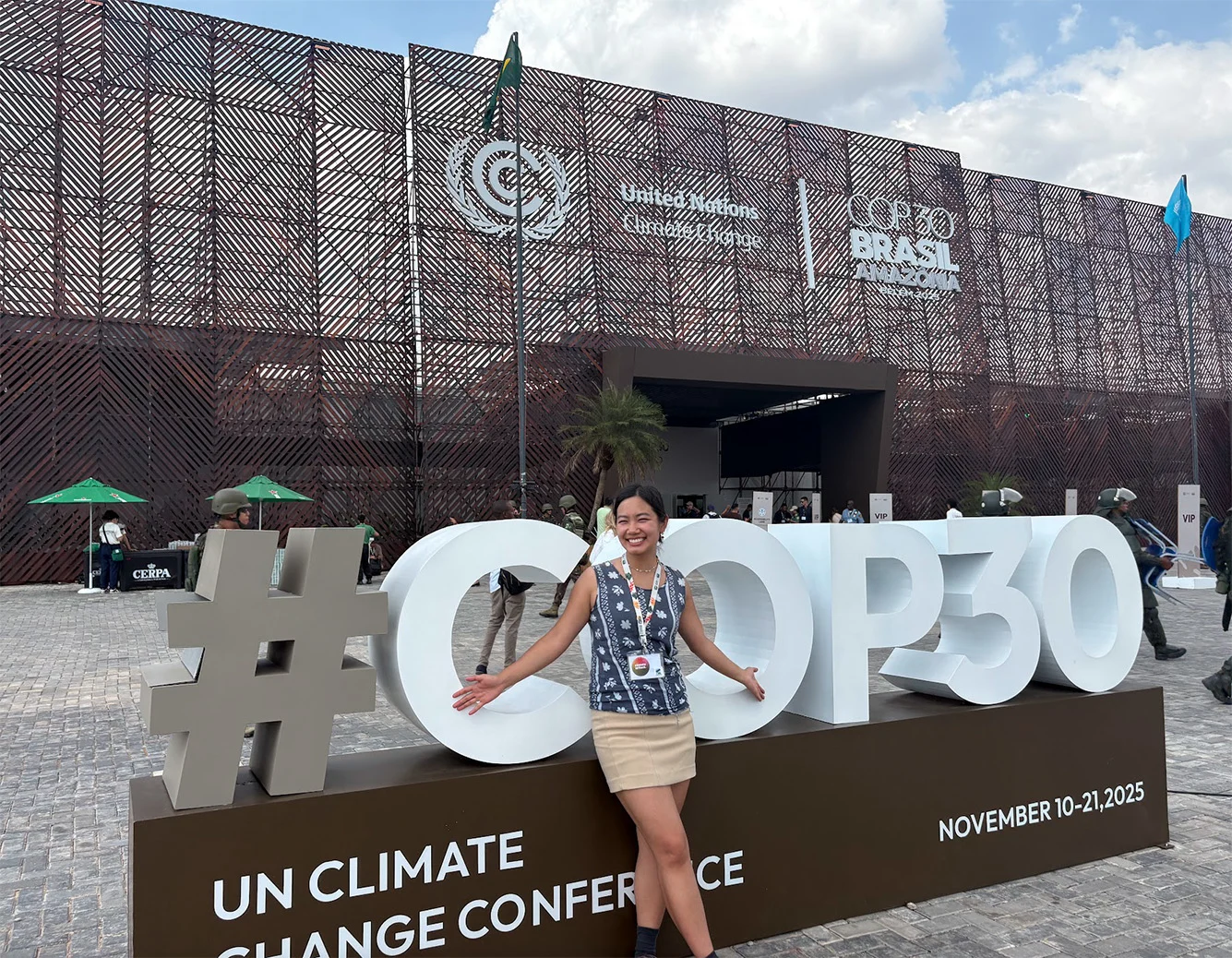
Eezu standing in front of the COP30 venue in Belem, Brazil. Image: Eezu Tan
Eezu standing in front of the COP30 venue in Belem, Brazil. Image: Eezu Tan
I think about ways to decolonise UN processes. My friend of Samoan heritage tells me how “activism” is seen as a “white people thing” in her community, particularly with the older generation. However, she says activism shows up in the form of “talanoa” a term used across the Pacific to describe a process of inclusive, participatory and transparent dialogue. It is used in governance - for example, by village chiefs to determine resource use and communal land management. It is grounded in principles of love, respect, humour and warmth. Very different to the UN speak of the negotiations.
I came to COP to observe climate action in the negotiation halls. However, I’ve come to realise that the real leaders sit outside of them. They are the small island states which pushed the world’s leaders to ratify the 1.5C Paris Agreement target ten years ago. They are the young people organising meetings through WhatsApp groups to push for ambitious action. They are the Indigenous leaders demanding a seat at the table to forge a better future.
 Built with Shorthand