
Improving nutrition and child and maternal health in rural Laos.


I always bring my son here for his health check-ups and vaccinations. The doctors are friendly and I follow their advice on nutrition and childcare. I'm sure I will have my antenatal care and give birth to my next baby here.

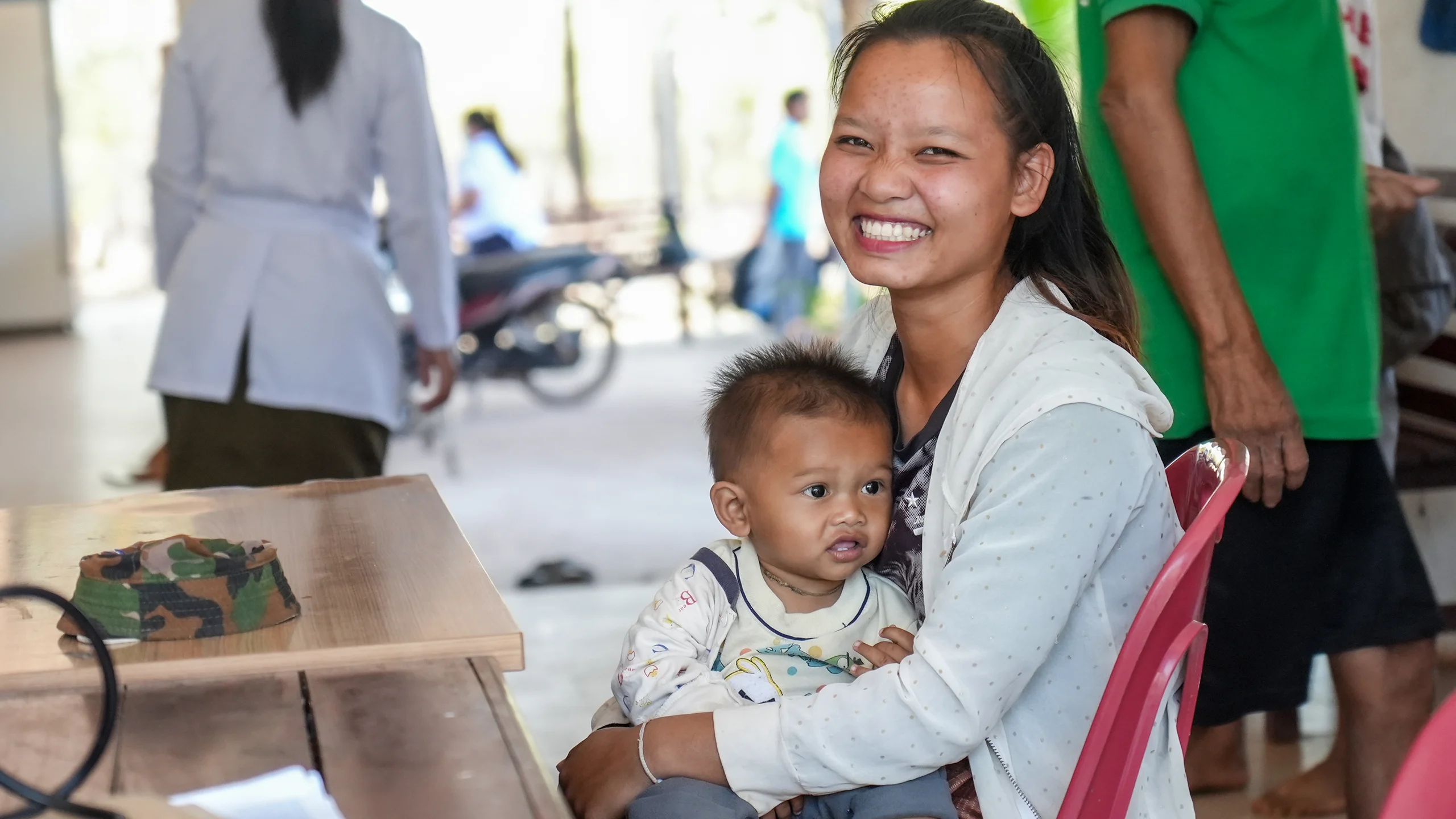
Khamkeo and her son at the local Health Centre.
Khamkeo and her son at the local Health Centre.
20-year-old Khamkeo lives the hilly and remote province of Saravan in Southern Laos. Last year, she safely gave birth at the local health centre in her village. For years, due to the condition of the centre, families who could afford it chose to travel to the provincial hospital instead, despite the long journey. Others chose to give birth at home, often without a skilled birth attendant present, putting both mother and baby at risk.


Recognising these challenges, and through a partnership with the Saravan District Health Office, Plan International embarked on an overhaul of the health centre in Khamko’s village.
The work was part of the WASH Integrated Nutrition (WIN) project, an Australian Aid supported project in Laos PDR that has just wound up after 9 years. WIN was started as a response to the high rates of under-nutrition in Laos, the highest in SE Asia. Approximately 44% of children under five demonstrate moderate to severe under-nutrition, or stunting.
A core aspect of the WIN project was CLTS sessions, or Community-Led Total Sanitation. CLTS aims to engage communities on infant and young child feeding, nutrition and hygiene practices, community wide water, sanitation and hygiene best practice, and menstrual hygiene management.
For the life of the project, this has led to nearly 170 communities across 2 provinces declared Open Defecation Free. And the entire district of Saravan being declared Open Defecation Free in 2024, a huge achievement.


65-year-old father Vene took part in CLTS sessions in his village, after which he decided to invest in building two toilets at his home to accommodate all his children. This has been transformational for his disabled daughter Bene.
I am so happy that Bene and her siblings now have easy access to the latrines, especially Bene, who can help herself whenever she needs to go to the toilet. I no longer have to worry about her safety and privacy.
The health implications for newborns, their mothers, and the entire community is obvious. Over 30,000 people in 74 communities now have access to basic sanitation, are washing their hands with soap and are treating and storing drinking water safely.
And at last count, the malnutrition level of children below two-years-old in project areas in Saravan Province has decreased by 8.40%. This indicates a combination of exclusive breastfeeding practice, better dietary standards, and improved hygiene practices at a village level.
The integration of CLTS sessions with strengthening health services and improving nutrition for mothers and babies is what has elevated the success of WIN. This innovative and integrated water, sanitation and hygiene and maternal health model has been actively adopted by other NGOs in the area and promoted within the national government of Laos PDR.
For Khamkeo and other young families in Laos, the legacy of the WIN project is access to safer, high quality health care closer to their home and healthier children and communities.


"As my pregnancy progressed and travelling by motorbike became too difficult, I decided to visit the new health centre,"
says Khamkeo, who was surprised at how much the facility had changed.
"I was amazed at how clean it was, the new equipment and the kindness of the health staff."


The WASH Integrated Nutrition project was supported by the Australian Government through the Australian NGO Cooperation Program (ANCP).
 Built with Shorthand